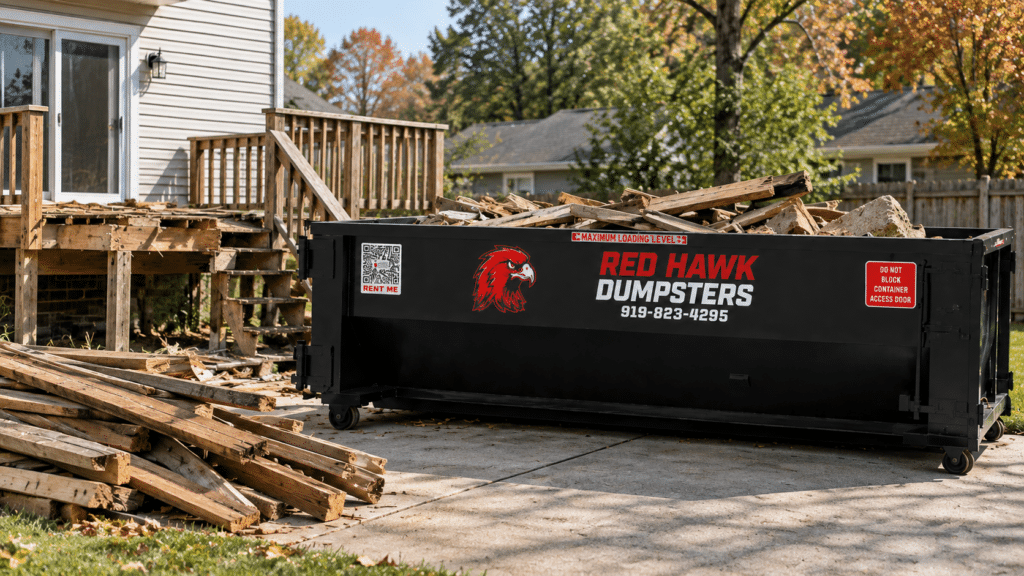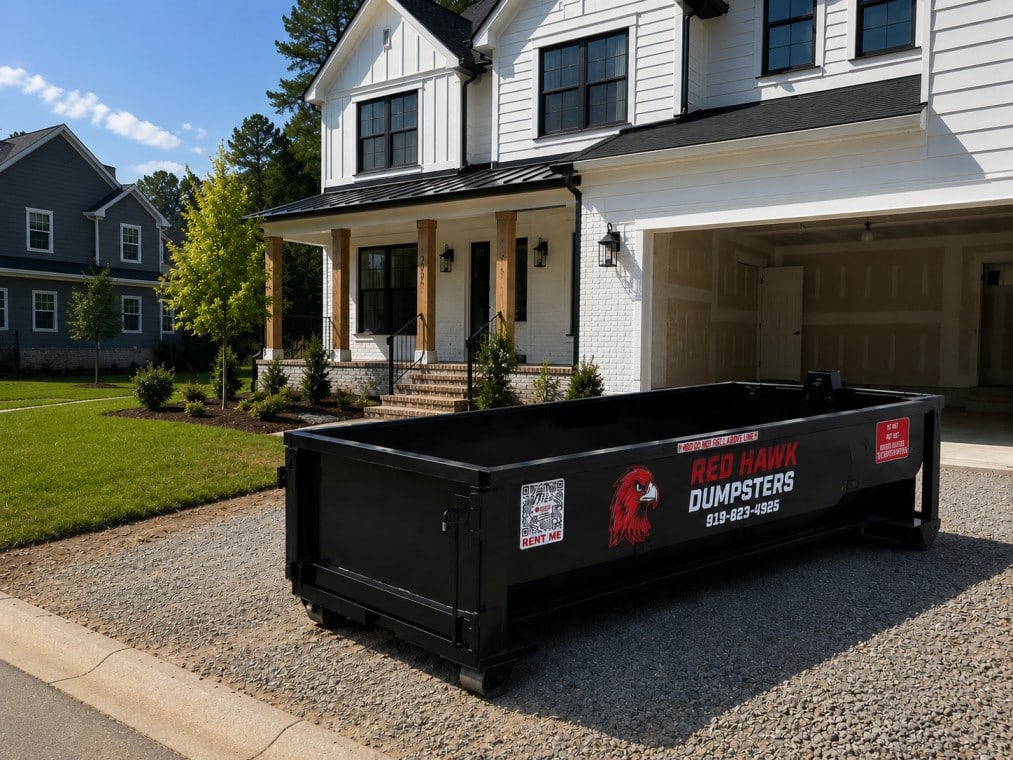
A planned October attic cleanout can clear years of accumulated clutter before winter arrives — but only when you know what to donate, what to dumpster, and what needs special disposal.
An October attic cleanout in Raleigh typically calls for a 13- or 15-yard roll-off dumpster, with a 20-yard container making sense when the project extends into other rooms or involves several bulky pieces of old furniture. Usable clothing, working appliances, and intact furniture belong in a donation pile, while general household junk, broken storage boxes, and damaged holiday decorations can go straight into the dumpster. Paint, batteries, chemicals, tires, and appliances containing refrigerant require separate disposal and should never be loaded without confirmation. Sort the attic into toss, donate, and special-disposal piles first, then book a dumpster with Red Hawk Dumpsters sized to the full scope of the cleanup.
Why Raleigh Attics Fill Up Before Winter
Attics across the Triangle tend to quietly accumulate years of belongings that never quite made it back downstairs. Broken furniture from a renovation three years ago, boxes of outgrown clothing, holiday decorations that were replaced but never discarded, old electronics, empty storage containers, abandoned hobbies, and items left behind by family members who have since moved out — all of it settles into the rafters and stays there.
October is when Raleigh homeowners start thinking about winter home preparation. Shorter daylight hours, dropping temperatures, and the approaching holiday season create a natural deadline. Nobody wants to climb into a sweltering attic in July, and once December arrives the space becomes genuinely unpleasant to work in. October offers a narrow window of comfortable temperatures and manageable humidity to finally deal with the clutter.
The challenge is that a serious attic cleanout produces more debris than the average curbside pickup can handle. Multiple trips to a Wake County convenience center eat an entire Saturday, and bulky items often do not fit in a personal vehicle at all. That is the point where a roll-off dumpster rental becomes the practical solution.
What Homeowners Overlook When Planning an Attic Cleanout
The most common oversight is treating the attic as a single, uniform pile of junk. In reality, a typical attic contains three distinct categories of material, and each one needs a different disposal path. Usable items should be donated. General household debris goes in the dumpster. Restricted materials — paint, solvents, batteries, tires, propane tanks, and appliances containing refrigerant — require separate handling and cannot legally go into a standard roll-off container.
A second gap involves insulation. Older Raleigh homes, particularly those built before the 1990s, may contain vermiculite insulation, which can harbor asbestos. Disturbing or bagging that material without testing first creates a serious health hazard. Homeowners who are unsure about the type or age of attic insulation should have it identified before any cleanout begins.
The third overlooked factor is access. Attic pull-down stairs, narrow hatch openings, and low rooflines make it difficult to pass large items down safely. Planning the removal route — and having a dumpster waiting in the driveway so items go straight from the attic to the container — prevents debris from piling up in hallways and living spaces during the project.
Planning the Dumpster Rental for an Attic Cleanout
Sizing a dumpster for an attic cleanout depends on both the volume of material coming out and the weight of that material. Attic contents are typically bulky but relatively light — boxes, clothing, decorations, and furniture weigh less per cubic yard than construction debris or roofing shingles. That means volume is usually the driving factor rather than weight, which makes a 13-yard or 15-yard dumpster a common starting point.
A 13-yard container holds roughly five pickup-truck loads and works well for a focused attic cleanout involving boxes, smaller furniture, and general household junk. A 15-yard dumpster provides a bit more breathing room for several bulky pieces or a project that extends into a closet or spare room. When the attic cleanout is part of a broader home cleanout — say, clearing the attic, a bedroom, and a garage at the same time — a 20-yard container becomes the safer choice.
Placement matters too. A driveway location keeps the container close to the house and shortens the carry distance from the attic, which matters when every item has to come down a pull-down ladder. Red Hawk provides driveway protection boards to prevent surface damage. Homeowners can review current dumpster rental pricing in the Triangle to compare sizes and rental periods before committing to a container.
Actionable Steps to Prepare for an October Attic Cleanout
How Waiting Until November Turns a Cleanout Into a Problem
Pushing an attic cleanout into late fall creates a cascade of practical problems. Daylight shrinks, making it harder to work safely in a dimly lit space. Temperatures drop, and an unheated attic becomes genuinely cold by mid-November. Falling leaves and early winter weather can complicate driveway placement and loading. What would have been a comfortable October weekend project turns into a rushed, uncomfortable chore done in poor conditions.
Without a dumpster on site, the alternative is repeated trips to a county convenience center or landfill. Each trip eats time, requires a vehicle capable of hauling bulky items, and still leaves the homeowner sorting through the same pile when they return. A container that is too small creates the same loop — one haul fills it, debris piles up in the driveway, and a second container has to be scheduled before the project can finish.
Loading restricted materials into a dumpster because there is no separate plan for them creates a different problem entirely. Hazardous waste disposal rules in North Carolina do not bend for convenience, and a contaminated load can be refused at the facility or result in additional charges. Sorting everything before the container arrives — and confirming any questionable items through Red Hawk’s dumpster rental FAQ — prevents that outcome entirely.
Clear the Attic Before Raleigh's Winter Sets In
An October attic cleanout works best when the project is planned before the first item comes downstairs. Sort belongings into donate, dumpster, and special-disposal categories. Identify restricted materials and insulation concerns early. Match the container size to the full scope of the cleanup — not just the visible pile — and schedule delivery so that debris flows directly from the attic into the dumpster without staging in the house.
Red Hawk Dumpsters is a locally owned roll-off dumpster rental company based in Raleigh, serving homeowners throughout Wake County and the greater Triangle. The company offers multiple residential dumpster sizes, driveway protection, upfront pricing, online booking with a 5% discount, and same-day delivery when available.
If an attic cleanout is on the October to-do list, the practical next step is simple: walk the space, estimate the volume, separate the donation pile from the disposal pile, and reach out to Red Hawk to confirm the right container size and delivery date before the weather turns.
KEY TAKEAWAY
A Raleigh attic cleanout before winter usually calls for a 13- or 15-yard dumpster, with a 20-yard container reserved for projects that extend beyond the attic itself. The most important planning step is sorting belongings into donate, dumpster, and special-disposal piles before ordering a container. The most common mistake is loading restricted materials like paint, batteries, or refrigerant appliances into a roll-off dumpster — those items require separate disposal. The practical next step is to inventory the attic, confirm any questionable materials, and schedule a dumpster sized to the full scope of the cleanup.
Frequently Asked Questions
What size dumpster do I need for an attic cleanout?
A 13-yard or 15-yard dumpster is often sufficient for a typical attic cleanout involving boxes, old furniture, holiday decorations, and general household junk. A larger 20-yard container may make more sense if the attic cleanout extends into other rooms or includes bulky, awkwardly shaped items that do not break down easily.
What can go in a dumpster during an attic cleanout?
Most nonhazardous household debris is accepted — old furniture, broken storage containers, boxes, clothing, toys, sports equipment, holiday decorations, lumber, and general junk. Paint, solvents, chemicals, batteries, tires, propane tanks, and appliances containing refrigerant are prohibited or restricted and require separate disposal.
What should I donate instead of throwing away?
Functional furniture, working appliances, clothing in good condition, intact toys, and usable household goods are better suited for donation than a dumpster. Raleigh-area donation centers and thrift organizations typically accept items that are clean, complete, and in working order.
Can I put old insulation in a dumpster?
Fiberglass batt insulation is sometimes accepted, but vermiculite insulation, which may contain asbestos, is not. If the age or type of insulation is uncertain, it should be tested before removal. Confirm any insulation disposal directly with Red Hawk Dumpsters before loading it into the container.
Do I need a permit for a dumpster in my driveway in Raleigh?
In most cases, no permit is needed when a dumpster sits entirely on private property such as a driveway. Placement on a public street may require a permit from the local municipality, and HOA rules can affect placement in some neighborhoods. Red Hawk can walk through placement options when you book.
Book Your Raleigh Attic Cleanout Dumpster
Red Hawk Dumpsters serves attic cleanouts and household junk removal across Raleigh and the Triangle.
NC Licensed & Insured * Same-day delivery available. Book online or call before noon.