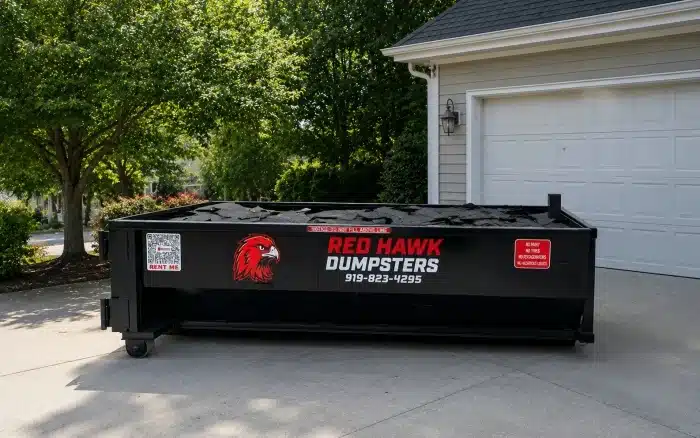
Efficient debris removal can be just as important to a fall construction schedule as labor, materials, and equipment — because a full or misplaced dumpster can stall a job site faster than any supply delay.
Effective construction dumpster rental starts with matching the container to the type and volume of debris, scheduling delivery before waste begins accumulating, placing the container where crews can access it efficiently, understanding material and weight rules, and planning swaps or additional pulls around project phases. Contractors managing demolition, remodeling, roofing, new construction, or tenant improvements may need different waste strategies as the project progresses. Contact Red Hawk Dumpsters for dependable construction dumpster rental in Raleigh before your next job gets underway.
When Debris Removal Becomes a Job-Site Bottleneck
Construction schedules depend on coordination. Labor, materials, equipment, inspections, subcontractors, and deliveries all need to happen in the correct order, and waste removal belongs in that same planning process. When debris begins accumulating without a clear disposal path, it rarely stays in one place — it spreads into material staging areas, walkways, and work zones.
Debris can begin accumulating quickly during interior demolition, framing, drywall removal, flooring tear-outs, roofing work, tenant improvements, exterior demolition, renovations, and new construction. An overflowing waste area or an unavailable dumpster slows crews, reduces usable workspace, complicates material staging, and forces workers to handle debris more than once before it ever leaves the site.
The dumpster should be treated as job-site infrastructure rather than an afterthought. When the container is in place, accessible, and matched to the phase of work, debris flows off the site at roughly the same pace the crews generate it. When it is not, every other part of the schedule absorbs the cost.
The Best Dumpster Strategy Changes With the Project Phase
Contractors often think of dumpster rental as one container for one project, but larger jobs may produce very different debris during different phases. The waste generated during demolition is not the same as the waste generated during framing, and neither matches what shows up during finish-out. Estimating debris by project stage — rather than by total project square footage — keeps the container matched to what the crew is actually producing at any given time.
Demolition Phase
Interior finishes, cabinetry, drywall, flooring, lumber, fixtures, and other approved demolition debris may accumulate rapidly. This phase typically produces the highest volume in the shortest period, which is why a larger container or a planned swap early in the job often keeps the work moving.
Framing and Rough-In
Lumber cutoffs, packaging, drywall scraps, and construction material waste may require more consistent but less explosive container volume. The container fills steadily rather than all at once, so the focus shifts toward keeping it accessible rather than maximizing capacity.
Exterior and Roofing Work
Shingles and other dense materials require additional attention to material and weight rules. A specialized roofing container may have different loading requirements from a standard mixed C&D roll-off, so the crew needs to know which container is on site before tear-off begins.
Finish-Out
Packaging, flooring remnants, trim, cabinetry scraps, and remaining construction debris may create a different waste stream from the demolition phase. The container that was right for tear-out may be more than what finish-out needs, which is where a planned swap can reduce cost and free up site space.
Coordinating pulls around these phases is where a contractor-focused service becomes valuable. You can review Red Hawk’s contractor dumpster rental service to see how pulls can be scheduled around project stages so the container is available when the work demands it.
“The most efficient construction dumpster plan is not simply choosing the biggest container available. It is matching dumpster capacity, material type, placement, and pickup timing to the actual phases of the job so debris leaves the site before it interferes with the work.”
Choosing a Roll-Off Dumpster for a Construction Site
Choosing the right container comes down to the type of construction project, expected debris volume, material density, length of the project, available job-site space, delivery truck access, the number of workers generating debris, whether demolition occurs all at once or in phases, and whether multiple pulls will likely be necessary. Red Hawk offers several roll-off dumpster sizes, but the best choice depends on the actual project rather than a generic square-footage rule.
A smaller container may be appropriate for a focused interior renovation or limited tear-out. Mid-sized containers often fit kitchen renovations, flooring projects, deck removal, or multi-room remodeling. Larger containers make sense for whole-house renovation, major demolition, additions, or high-volume construction work. The specifics are covered in more detail through Red Hawk’s construction dumpster rental service.
Remember that dense materials such as concrete, masonry, tile, and roofing shingles require special attention, because available physical volume does not necessarily equal safe hauling capacity. A container that looks half full can already be at its weight limit if it is loaded with dense debris, which is why the material stream matters as much as the container size.
Material Type Matters as Much as Dumpster Size
Contractors should identify their waste stream before ordering. Common approved construction debris may include lumber, drywall, flooring, tile, roofing materials, metal, renovation debris, and demolition materials — but specialized waste streams may require different containers. Qualifying clean concrete may need to remain separate from mixed construction debris, while a dedicated roofing shingle container may have different requirements from a standard roll-off.
Crews should know which materials belong in which container before work begins, because mixing a specialized waste stream into the wrong container can complicate hauling and disposal. Hazardous materials, liquids, asbestos-containing materials, flammable materials, and other prohibited waste should never be assumed acceptable simply because the project is a construction job.
When a material is questionable, confirm it with the dumpster provider before loading. A short conversation up front is far easier than dealing with a contaminated or overweight load once the container is already on site.
Container Placement Can Save — or Waste — Labor
A dumpster placed where workers naturally generate debris can reduce unnecessary handling, while a poorly placed container may force crews to carry or move material across the property repeatedly. Placement considerations include proximity to demolition or work zones, truck access for delivery and pickup, space for the roll-off truck to maneuver, overhead wires and trees, construction equipment access, material delivery zones, parking, temporary fencing, site entrances, worker walkways, access to garages or loading areas, and the future phases of construction.
The optimal placement on day one may interfere with another phase of the project later, so contractors should think ahead. A container that works perfectly during demolition might sit right where framing materials need to be staged, which is why placement should be planned with the full project timeline in mind rather than just the first phase.
If you are considering placement in a public street or right-of-way, verify current local requirements before delivery. Raleigh’s rules can vary by location, and assuming public-street placement is allowed can create a problem on delivery day that stops work before it starts.
Schedule Dumpster Swaps Around the Work, Not After It
Waiting until a container is completely full to think about pickup can create downtime. On larger construction projects, contractors may need a container pull, a replacement container, multiple dumpsters, scheduled swaps between project phases, or a final pickup after cleanup. Communication with the dumpster provider becomes more important as projects increase in size or complexity.
Remodelers may fill one container during demolition and another later in the project, while roofers or demolition contractors may generate large amounts of debris over a much shorter time. Proactive scheduling gives both the contractor and the hauling company more opportunity to coordinate logistics, so the next container arrives before the current one becomes a bottleneck.
Red Hawk’s contractor service specifically supports repeat construction customers and projects where multiple pulls may be needed, with pulls coordinated around project phases so contractors are not left waiting unnecessarily between demolition, construction, and finish-out stages.
Fall Job-Site Dumpster Checklist for Raleigh Contractors
How a Full Dumpster Can Throw Off the Rest of the Job
Consider a realistic scenario. A demolition crew begins working quickly and fills the container earlier than anticipated, and no replacement has been scheduled. Instead of loading debris directly into the dumpster, workers begin stacking it somewhere else on the property. Now the debris has to be moved twice. The temporary pile may occupy space needed for material deliveries or other trades, a subcontractor arrives and has less room to work, and the contractor has to stop what they are doing to arrange an urgent pickup.
Similar problems occur when the wrong container size is ordered, heavy materials are loaded incorrectly, a specialized waste stream gets mixed into the wrong container, the dumpster blocks equipment needed later, delivery access becomes obstructed, or a swap is requested only after the container is already full. The original mistake may seem minor, but it can increase labor, disrupt sequencing, reduce usable site space, and create avoidable downtime.
Professional construction waste management is less about getting rid of trash and more about keeping debris flowing off the site at approximately the same pace the crews generate it. When the container, placement, and swap schedule are planned ahead of time, waste removal stops being a crisis that interrupts the work and becomes a background process that supports it.
Contractor Accounts Can Simplify Repeat Dumpster Rentals
Contractors who rent repeatedly have different needs from one-time residential customers. Multiple active job sites, repeat booking, consistent placement preferences, project-specific invoicing, scheduling changes, dumpster swaps, multiple pulls, fast communication, and keeping billing organized by project all add up to a workload that a standard rental process is not built to handle.
Red Hawk offers contractor account setup designed around repeat trade customers. The contractor program currently includes features such as simplified repeat booking, job-based invoicing, coordinated pulls, and scheduling support. These accounts are built to keep the logistics simple for contractors who are managing more than one job at a time, so waste removal does not become another administrative task on top of the build.
Keep Fall Construction Moving With Better Debris Planning
Construction debris removal should be planned alongside labor, materials, and project scheduling. Contractors should match the dumpster to the actual waste stream, consider weight as well as volume, plan placement before delivery, coordinate pulls before the container becomes a bottleneck, and separate specialized materials when required. When those elements are in place, waste removal stops competing with the work and starts supporting it.
Red Hawk Dumpsters provides contractor and construction roll-off dumpster rental from its Raleigh operation to projects throughout Raleigh and the Greater Triangle, including Wake County, Durham County, Johnston County, Orange County, Cary, Apex, Garner, Durham, Chapel Hill, Wake Forest, Holly Springs, Fuquay-Varina, Clayton, Knightdale, and Morrisville. The company works with GCs, subcontractors, remodelers, roofers, demolition contractors, and other construction professionals, and you can review current container options through Red Hawk’s Raleigh dumpster rental page.
Before the next fall project gets underway, review current container options, discuss upcoming project requirements with Red Hawk, and book a dumpster that is matched to the phases of the job. A short planning conversation now keeps the container, placement, and swap schedule aligned with the work — so debris leaves the site at the same pace the crews generate it.
KEY TAKEAWAY
Construction debris removal should be planned by project phase, because the waste generated during demolition differs from what shows up during framing or finish-out. Material type and weight matter as much as dumpster volume, so proper placement and proactive swaps reduce avoidable job-site downtime. Red Hawk Dumpsters provides contractor-focused roll-off service for Raleigh and the Greater Triangle, with pulls coordinated around project phases and contractor accounts built for repeat trade customers.
Frequently Asked Questions
What size dumpster is best for a construction project?
The best size depends on project scope, type of debris, material density, and how quickly waste will be generated. Smaller renovations may need less capacity, while whole-house renovations, additions, and major demolition can require larger containers or multiple pulls.
What can contractors put in a construction dumpster?
Common construction debris may include approved materials such as lumber, drywall, flooring, tile, metal, and renovation waste. Accepted materials vary by dumpster type, so contractors should confirm heavy, specialized, or questionable materials before loading.
Can concrete go in a construction dumpster?
Concrete is unusually heavy and may require a dedicated heavy-material or clean-concrete container depending on the amount and whether other debris is mixed with it. Contractors should tell the dumpster company about concrete before ordering.
How often should a dumpster be swapped on a construction site?
There is no single schedule because debris production varies by project phase. Contractors should monitor the container and coordinate swaps before it becomes full enough to interfere with job-site operations.
Do contractors need a dumpster for remodeling projects?
Many remodeling jobs generate drywall, flooring, cabinetry, lumber, fixtures, and other debris that can be difficult to manage without a central container. A roll-off dumpster can simplify cleanup when the container and rental period are matched to the actual project.
Book a Construction Dumpster for Your Next Raleigh Job
Red Hawk Dumpsters serves contractors and construction professionals across Raleigh and the Greater Triangle.
NC Licensed & Insured * Same-day delivery available. Book online or call before noon.