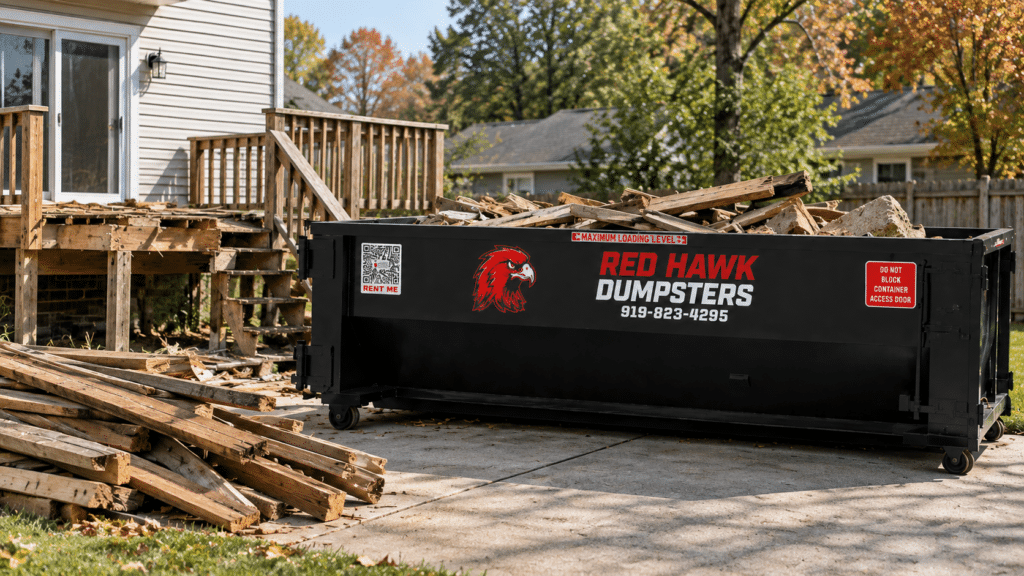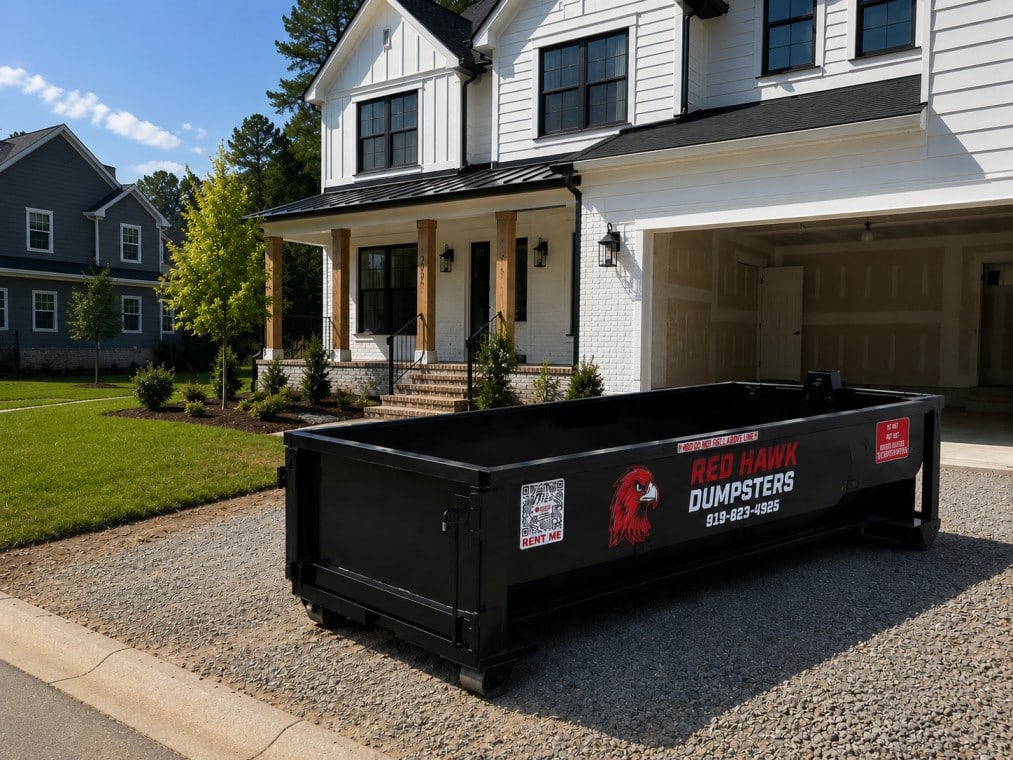
Disposing of heavy concrete the right way should be planned before demolition begins — because broken slabs become a weight problem long before they look like one.
A dedicated concrete dumpster is especially useful when removing a driveway, patio, sidewalk, slab, or similar concrete feature, because broken concrete becomes extremely heavy long before a container appears physically full. Homeowners should determine whether the project will generate clean concrete or mixed demolition debris before choosing a container, and clean concrete generally needs to remain separated from materials such as dirt, brick, wood, drywall, gravel, and trash when using Red Hawk’s dedicated concrete container. Reach out to Red Hawk Dumpsters for concrete dumpster rental in Raleigh before your fall driveway or patio demolition begins.
Why Concrete Removal Creates a Different Disposal Problem
A homeowner may look at an aging patio or cracked driveway and assume demolition debris will behave like ordinary renovation waste. In reality, concrete is dramatically denser than materials such as furniture, drywall, cardboard, or household junk. A relatively compact pile of broken concrete can represent a substantial amount of weight, which changes how the debris has to be loaded, hauled, and disposed of.
Loading heavy concrete into an ordinary container without considering its intended use or weight allowance can create problems quickly. A general-purpose roll-off may have plenty of physical volume left while the load has already reached its practical or legal hauling limit. That mismatch between what the container looks like and what it actually weighs is the root of most concrete disposal headaches.
Concrete disposal should be planned before demolition begins rather than after a pile of broken slabs is already sitting in the driveway. Knowing how the debris will be handled — and which container it belongs in — keeps the project moving without a surprise hauling problem partway through the job.
Clean Concrete vs. Mixed Demolition Debris
One of the most important distinctions in concrete disposal is the difference between clean concrete and mixed demolition debris. Clean concrete is eligible concrete material without unrelated debris mixed into the load, and that distinction matters because clean concrete can follow a very different disposal path from a general construction pile.
A driveway or patio demolition rarely produces only concrete. Depending on the project, workers may encounter soil or dirt, a gravel or stone base, brick or pavers, wood forms, landscaping debris, fencing, packaging, general household trash, and other construction materials. These materials should not automatically be placed into a dedicated clean-concrete dumpster, because they change how the load can be processed.
Red Hawk’s current clean-concrete container does not allow dirt, brick, stone, gravel, wood, drywall, trash, or mixed construction debris. If your project will generate more than concrete, it is worth reviewing the details on the concrete dumpster rental page and discussing the load with Red Hawk before ordering so the appropriate type of container is selected from the start.
“The biggest mistake in concrete disposal is treating every demolition pile as the same type of waste. Clean concrete can follow a very different disposal path from mixed construction debris, so knowing what your project will generate before demolition begins can prevent avoidable loading and hauling problems.”
When Does a Concrete Dumpster Make Sense?
A dedicated concrete dumpster is typically a good fit for projects that generate uncontaminated concrete. That includes removing an old concrete driveway, breaking up a backyard patio, removing a sidewalk or walkway, tearing out a concrete slab, removing portions of a concrete foundation, a concrete hardscape renovation, or certain contractor and demolition projects that produce clean concrete as the primary waste stream.
The amount of debris, the type of concrete, the presence of other materials, property access, and the demolition method should all be considered before choosing a container. Not every concrete project automatically requires the same dumpster — a small sidewalk patch generates a very different load than a full driveway tear-out — but when the load will be clean concrete, a dedicated container is often the most efficient way to handle it.
Why Concrete Weight Changes the Dumpster Equation
The relationship between density, dumpster volume, and transportation weight is where concrete disposal diverges from ordinary waste. A standard roll-off may have significant physical volume available, but concrete can reach practical or legal hauling-weight limits before the container looks full. Choosing a dumpster based entirely on cubic-yard volume is not appropriate for very dense debris, because the limiting factor is weight rather than space.
Red Hawk’s dedicated clean-concrete solution is currently a 7-yard container designed around the unique weight characteristics of concrete. Its smaller physical size compared with large general-purpose roll-offs is intentional rather than a disadvantage — it matches the way concrete actually weighs, so the container can be filled and hauled without exceeding safe limits. That is why a smaller container is often the correct choice for a dense concrete load, even when a larger roll-off would look like more capacity on paper.
What If Your Driveway or Patio Project Creates Mixed Debris?
Not every demolition job produces clean concrete. A patio renovation may involve concrete plus pavers, landscaping material, soil, fencing, lumber, tile, or other debris. A larger renovation could also involve drywall, flooring, cabinetry, or construction waste from another portion of the project. When multiple approved construction and demolition materials are being discarded together, a standard construction dumpster is often more appropriate than a dedicated clean-concrete container.
Red Hawk’s construction dumpster rental service covers mixed construction and demolition debris when a project generates multiple types of approved waste. Material and weight restrictions still apply, and customers should describe the project accurately before booking so the right container is selected for what the job will actually produce.
If you are unsure whether your load qualifies as clean concrete or mixed debris, the simplest step is to describe the project to Red Hawk before ordering. A short conversation up front prevents the situation where a clean-concrete container gets contaminated with materials that belong in a different container entirely.
Planning Dumpster Placement Before Demolition Starts
Placement can affect the efficiency of driveway and patio removal just as much as the container choice. The dumpster should be reasonably close to the demolition area so broken concrete does not have to be carried across the yard, and the delivery truck needs adequate access to reach the spot without difficulty. Consider overhead wires, trees, structures, and other obstacles that could interfere with delivery or pickup, and move vehicles out of the way before the container arrives.
Maintaining access to garages or entrances matters, especially when a driveway demolition is underway, and placement should be coordinated with any contractors working on the job. Think through how broken concrete will be moved from the demolition area to the container, since avoiding unnecessary double handling of heavy material saves both time and effort during the project.
If you are considering street placement, verify current local permit or right-of-way requirements rather than assuming public-street placement is allowed. Raleigh’s rules can vary by location, so confirming the requirement ahead of time avoids a placement problem on delivery day.
Concrete Removal Checklist Before You Start Breaking the Slab
How One Disposal Mistake Can Slow the Entire Demolition Project
A small mistake early in the process can create unnecessary work later. A homeowner may begin breaking up a driveway before determining where the concrete will go, leaving a pile that has to be moved or handled multiple times before it reaches a container. Someone may order a general-purpose dumpster without explaining that the project involves large amounts of heavy concrete, which can create a weight problem before the job is half finished.
Another common issue is a homeowner who correctly orders a clean-concrete container but accidentally contaminates the load with dirt, gravel, brick, wood, or general demolition waste. Each of these mistakes can complicate hauling, sorting, recycling, disposal, scheduling, and job-site cleanup. If contractors are involved, a full or incorrectly loaded container can also interrupt demolition progress while workers wait for a disposal solution.
Disposal planning should be considered part of the demolition project itself. The container type, accepted materials, delivery location, demolition sequence, and pickup schedule should ideally be determined before the first section of concrete is broken apart.
Make Concrete Removal the Easy Part of Your Fall Project
Fall driveway and patio removal projects are easier to manage when concrete disposal is planned beforehand. Concrete is exceptionally dense, clean concrete must remain separate from unrelated debris when using a dedicated clean-concrete container, and the correct dumpster should be selected based on both the material and the project — not just container volume. Those three lessons carry through almost every concrete demolition, whether the job is a small walkway or a full driveway tear-out.
Red Hawk Dumpsters is a Raleigh-based roll-off dumpster company serving Raleigh and communities throughout the Greater Triangle, including Cary, Apex, Garner, Wake Forest, Holly Springs, Fuquay-Varina, Clayton, and Knightdale. The company’s dedicated clean-concrete dumpster is a disposal option for qualifying driveway, patio, sidewalk, slab, and similar demolition projects. You can review current availability and container options through Red Hawk’s Raleigh dumpster rental page.
Before demolition starts this fall, explain your concrete-removal project to Red Hawk, confirm whether the load will be clean concrete or mixed debris, and book the appropriate dumpster so the container is in place when the first slab is broken apart.
Red Hawk Dumpsters is a Raleigh-based roll-off dumpster company serving landlords, property managers, homeowners, contractors, and businesses. The company provides 10-, 15-, 20-, and 30-yard containers, online booking, multiple rental periods, driveway protection, and same-day delivery when scheduling and inventory allow, across Raleigh, Wake County, and communities throughout the Triangle.
Before the next turnover gets underway, take the time to inventory the materials, resolve any disposal questions, compare container sizes, and schedule the rental before maintenance work begins. That small amount of planning is usually what separates a turnover that stays on schedule from one that quietly slips week after week.
KEY TAKEAWAY
Concrete disposal should be planned before demolition begins, because concrete becomes extremely heavy before a dumpster appears physically full. Clean concrete must remain separated from prohibited mixed debris such as dirt, brick, gravel, wood, and drywall. Red Hawk Dumpsters provides a dedicated concrete disposal option for qualifying Raleigh-area driveway, patio, sidewalk, and slab removal projects, with the container type matched to the actual weight characteristics of concrete.
Frequently Asked Questions
What size dumpster do I need for concrete removal?
Concrete is extremely dense, so the correct container is not determined by cubic-yard capacity alone. The amount of concrete, type of material, weight, and the dumpster provider’s rules all need to be considered before booking.
Can I put broken concrete in a dumpster?
Concrete can be accepted by certain roll-off dumpster services, but customers need to tell the provider that the load contains concrete before booking. Heavy-material and clean-concrete containers may have different requirements from general-purpose dumpsters.
What counts as clean concrete?
Clean concrete is concrete that has not been mixed with unrelated debris. For Red Hawk’s dedicated clean-concrete container, customers should not mix in dirt, brick, stone, gravel, wood, drywall, trash, or other construction waste.
Can I mix dirt or gravel with concrete in a dumpster?
Customers should never assume these materials can be mixed. Red Hawk’s dedicated clean-concrete container is intended for clean concrete and excludes dirt, gravel, stone, and other mixed debris.
Do I need a dumpster to remove a concrete driveway or patio?
Smaller projects may have different disposal options, but a roll-off container can make larger demolition projects significantly easier by providing one central location for heavy debris. The correct choice depends on how much material is being removed and whether the load will remain clean concrete.
Book Your Concrete Dumpster Before Demolition Starts
Red Hawk Dumpsters serves concrete removal projects across Raleigh and the Greater Triangle.
NC Licensed & Insured * Same-day delivery available. Book online or call before noon.