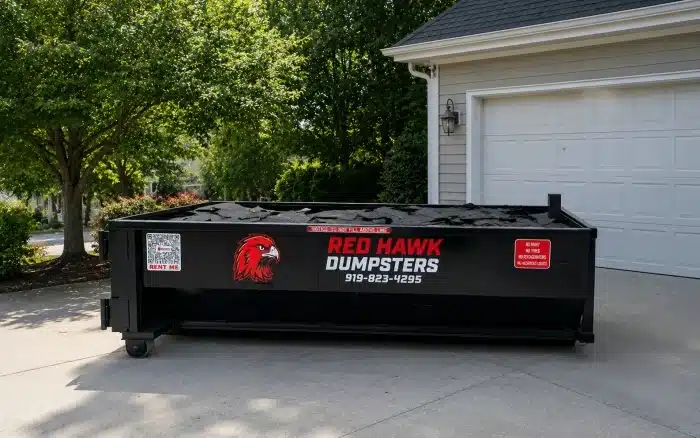
Planning roofing debris disposal before tear-off day can make a fall roof replacement cleaner, faster, and easier to manage.
Shingles from a roof replacement are heavy, bulky, and far easier to manage when a roll-off container is positioned at the property before tear-off begins. Homeowners and roofing crews should choose a container intended for roofing debris, understand which materials are allowed, plan placement in advance, and coordinate delivery and pickup with the roofing schedule. Reach out to Red Hawk Dumpsters for roofing dumpster rental in Raleigh before your fall roof replacement gets underway.
Why Roofing Debris Needs a Disposal Plan Before Tear-Off Day
A roof replacement can produce a concentrated amount of heavy debris in a short period. Once crews begin removing shingles, underlayment, flashing, nails, and other roofing components, having no designated disposal location can slow the project and create unnecessary clutter around the property.
Waiting until the roof is already being removed to think about disposal is where scheduling problems begin. The container may not be available on the day tear-off starts, the placement may not work for the crew, or the wrong type of container may show up for the materials being removed. Coordinating container delivery with the roofing contractor or project start date keeps the flow of debris moving from roof to dumpster without interruption.
Roofing shingles also differ from ordinary household junk because weight becomes an especially important consideration. A pile of old shingles takes up less visual space than furniture or boxes, but it can weigh significantly more per cubic yard, which is why disposal planning for a roof is a different calculation than a garage cleanout.
What Actually Goes Into a Roofing Dumpster?
A typical roof replacement generates a specific set of materials. The most common include asphalt roofing shingles, roofing felt or underlayment, roofing nails, flashing, and small amounts of associated roofing debris where permitted. These are the materials a dedicated roofing container is designed to handle.
A roofing project may also produce other materials, though, including plywood or roof decking, gutters, fascia, insulation, packaging, or damaged lumber. Material acceptance rules can vary by container type and disposal method, so a dedicated shingle container may have different loading rules from a general construction dumpster.
Red Hawk offers a container specifically designed for this work, and you can review the details on the roofing shingle dumpster page. When a roofing project includes materials other than standard roofing shingles, confirm the load with Red Hawk before loading rather than assuming every roofing-related material belongs in the same container.
Photographs, written notes, maintenance records, and item inventories can help the property team distinguish tenant possessions from damaged building materials or owner-supplied furnishings. Photographs alone do not authorize disposal, though — ownership, notice, storage, and lease questions should be resolved before any disputed possessions are loaded into a container.
Why Shingle Weight Matters More Than Many Homeowners Expect
Roofing shingles are dense. A container can become extremely heavy even when it does not visually appear full, which is why roofing debris should never be evaluated only by how much physical space it occupies. Dumpster capacity, allowable material type, transportation limits, and disposal weight all matter, and a shingle load can reach a weight concern long before it reaches the top of the container.
Multiple existing roofing layers can increase the amount of debris generated during a tear-off as well. A home with one layer of shingles produces a very different load than one with two or three layers stacked on top of each other, and that difference shows up in both volume and weight.
Red Hawk’s roofing-focused dumpster solution is specifically positioned for this kind of work. The company’s current dedicated roofing shingle container is designed to handle the weight profile of a tear-off rather than treating roofing debris like ordinary household junk, and you can review the specs on the roofing dumpster rental page.
“Roofing debris is a weight problem as much as a space problem. Planning the container before tear-off day helps keep shingles contained, the property organized, and the roofing project moving without an avoidable disposal bottleneck.”
How to Plan Dumpster Placement for a Raleigh Roof Replacement
Placement affects both roofing efficiency and property access. The dumpster should be reasonably close to the work area so the crew can move debris directly from the roof to the container rather than carrying it across the yard. At the same time, safe access for the delivery truck has to be preserved, with enough room for the truck to back in and out without difficulty.
Think through driveway dimensions and overhead clearance, since low branches, power lines, or overhangs can interfere with both delivery and pickup. Avoid blocked garages or vehicles when possible, and keep the container away from obstacles that could interfere with delivery or pickup. Coordinate placement with the roofing contractor so the location works for the crew, and make sure residents still have protected access to the home while work is underway.
If the only viable placement is on a public street, check current Raleigh requirements and confirm whether authorization is needed before the container is dropped. Local rules can vary, so verifying the requirement ahead of time avoids a placement problem on delivery day.
How to Coordinate a Roofing Dumpster With Your Fall Project Schedule
The container should ideally arrive before or in coordination with the start of tear-off work. Homeowners frequently use the milder portions of the year for exterior home improvement projects, which makes fall a popular season for roof replacements across Raleigh, Cary, Apex, Garner, and the rest of the Greater Triangle. That also means advance scheduling is useful, because roofing contractors and dumpster companies are often busiest during the same window.
Walk through the timeline with the delivery date, expected tear-off date, loading period, and pickup scheduling all in mind. Build in a small buffer for project delays, since weather or material delivery issues can shift a roofing start date by a day or two. Confirm with the dumpster company how the rental period works so the container is available for the full duration of the tear-off rather than just the first day.
Red Hawk offers rental periods designed to accommodate different project timelines, including options that match the length of a typical roofing project. Customers should select the current rental option that best matches their roofing schedule rather than assuming a standard period will cover every project.
Roofing Shingle Disposal Checklist Before the Crew Arrives
When Poor Disposal Planning Starts Delaying the Entire Roofing Job
One seemingly small oversight can affect the entire roof replacement. If the roofing crew begins tear-off before a container is available, shingles start accumulating around the job site. Workers then have to handle debris multiple times, moving it from the roof to a temporary pile and later from the pile to the dumpster, instead of moving it directly from the roof to the disposal container.
If the wrong type of dumpster is ordered, unusually heavy shingles or mixed materials may create additional complications. If container placement was not discussed ahead of time, the delivery location could interfere with vehicles, contractors, or access to the home. Each of these issues creates unnecessary labor, cleanup, rescheduling, and project delays that could have been avoided with a short planning conversation.
The best approach is to treat debris removal as part of the roof replacement plan — not as something to figure out after the shingles start coming off. Working with a local dumpster company familiar with roofing jobs makes that easier, because the container, placement, and rental period are already matched to how a tear-off actually unfolds.
Get the Right Roofing Dumpster in Place Before Tear-Off Day
Planning shingle disposal before a fall roof replacement begins keeps the project cleaner, faster, and easier to manage. A dedicated roofing container positioned at the property before tear-off starts lets the crew move debris directly from the roof to the dumpster, avoids the weight and material issues that come from using the wrong container, and prevents the kind of scheduling problems that push a roofing job past its expected finish date.
Red Hawk Dumpsters is a Raleigh-based roll-off dumpster rental company serving Raleigh and communities throughout the Greater Triangle. The company offers a dedicated roofing shingle dumpster specifically geared toward roofing tear-offs, along with standard roll-off containers for larger roofing and construction projects. You can review current container options and availability through Red Hawk’s Raleigh dumpster rental page.
Before the roofing crew arrives this fall, check availability, review current rental options, and book a dumpster that matches your roofing schedule. A short conversation now keeps the entire project moving from the first shingle removed to the final haul-away.
KEY TAKEAWAY
Plan roofing debris removal before tear-off begins so the crew can move shingles directly from the roof to the container. Shingle weight matters as much as container volume, so confirm allowed materials before loading. Red Hawk Dumpsters offers a roofing-focused dumpster solution for Raleigh-area tear-off projects, with rental periods designed to match a typical roofing schedule.
Frequently Asked Questions
What size dumpster is best for roofing shingles?
The correct container depends on the roofing material, quantity, number of roof layers, and the dumpster company’s material rules. Red Hawk’s dedicated roofing shingle dumpster is specifically geared toward tear-off projects.
Can asphalt shingles go in a roll-off dumpster?
Asphalt shingles are commonly handled through roofing or construction dumpster services, but customers should confirm the selected container’s material requirements before loading.
How do I dispose of old roofing shingles in Raleigh, NC?
Homeowners and roofers can arrange a roll-off dumpster for tear-off debris and have the container hauled away after the project. Confirm accepted materials and any local requirements before loading.
Can roofing shingles be mixed with wood and other construction debris?
Mixing materials may affect which container should be used. Confirm with the dumpster provider before combining shingles with decking, lumber, insulation, or other construction waste.
When should I schedule a dumpster for a roof replacement?
Schedule in advance and coordinate delivery so the container is available when tear-off work begins. This reduces double handling and keeps debris contained throughout the project.
Book Your Roofing Dumpster Before Tear-Off Day
Red Hawk Dumpsters serves roofing projects across Raleigh and the Greater Triangle.
NC Licensed & Insured * Same-day delivery available. Book online or call before noon.