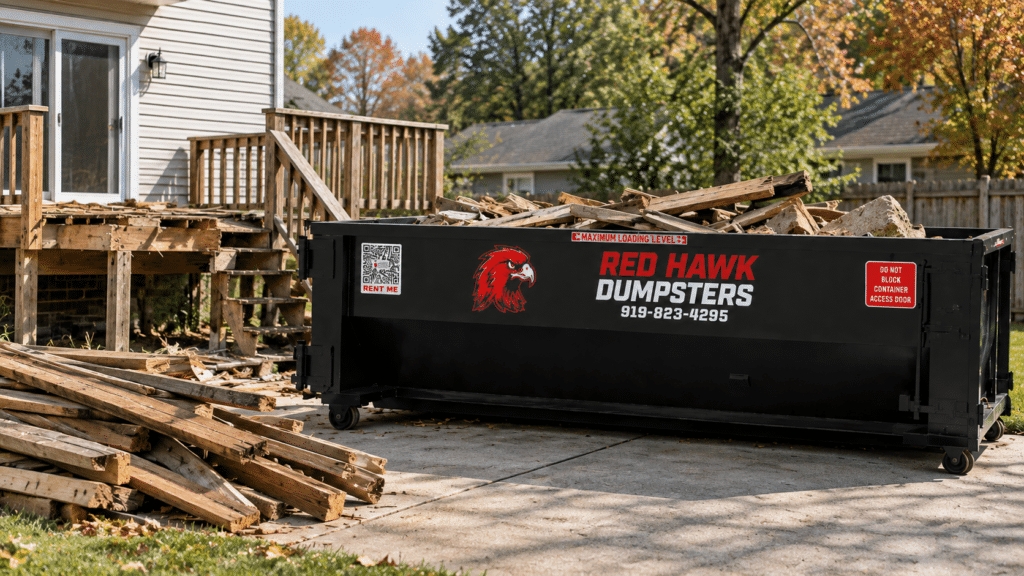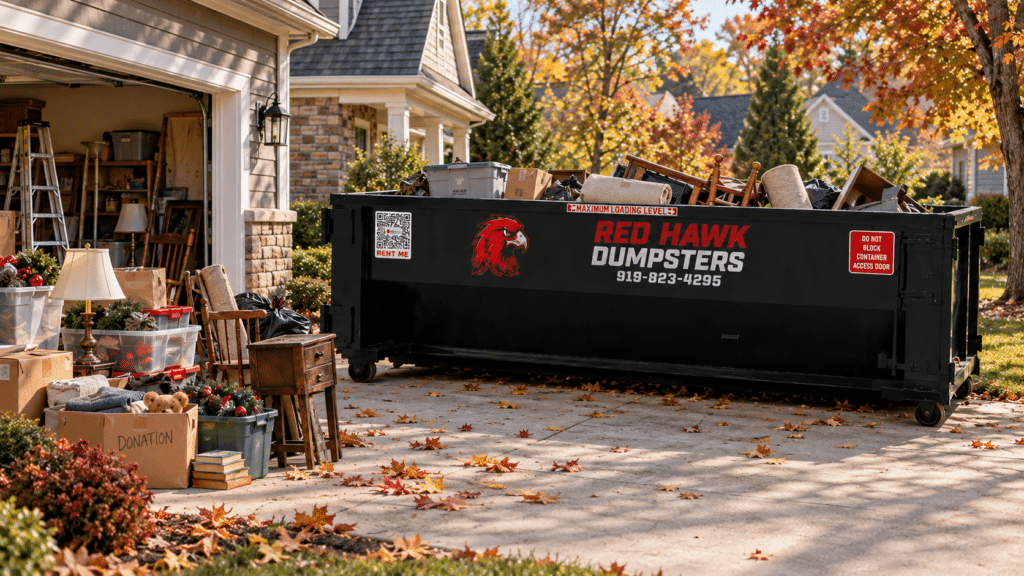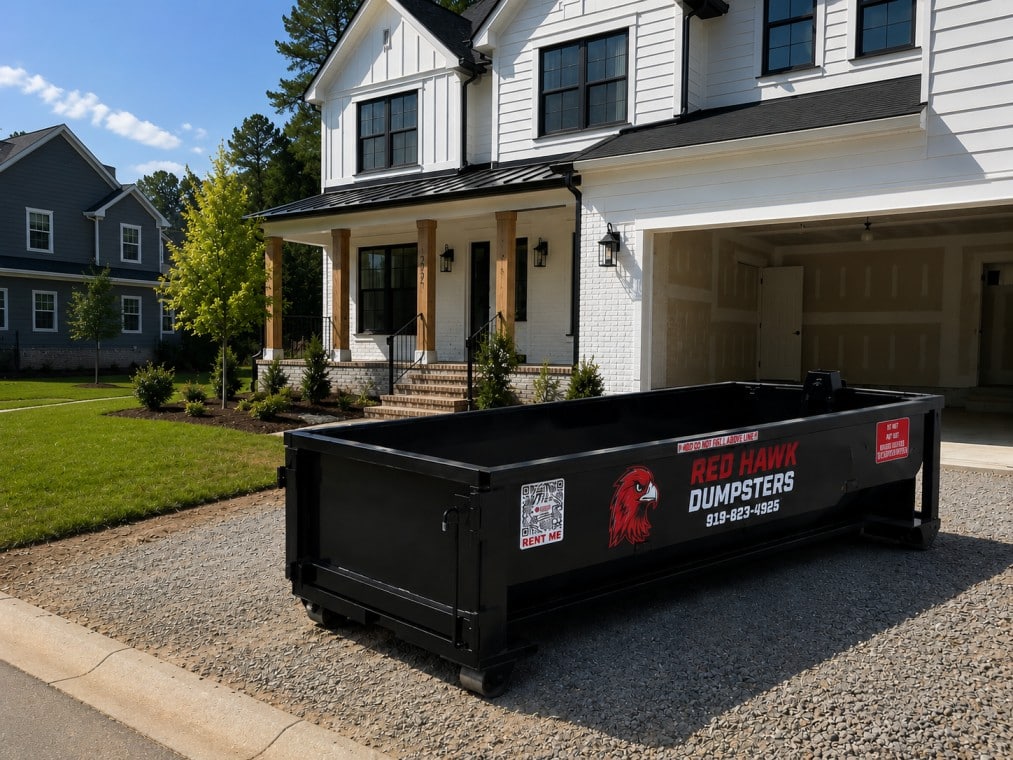
Late-summer trimming, garden clearing, storm cleanup, and outdoor projects can produce more debris than household collection can reasonably handle.
Common yard debris such as branches, brush, leaves, grass, plants, and other nonhazardous landscaping waste may generally be placed in a Red Hawk roll-off dumpster, provided the materials comply with the company’s current rules and the load does not contain prohibited items. Large logs, stumps, soil, rocks, concrete, treated lumber, chemicals, fuel containers, and mixed heavy materials may require additional confirmation because they can affect weight, disposal requirements, or container selection. Confirm your debris type and reserve a dumpster with Red Hawk Dumpsters before you start cutting and hauling.
Why Wake County Yards Need a Real Cleanup by Late Summer
By the time August rolls around, most Wake County yards are carrying the evidence of an entire growing season. Shrubs have pushed well past their spring shape, fallen limbs sit wherever the last storm dropped them, and garden beds are full of spent tomato plants, dying annuals, and weeds that outgrew the mulch line weeks ago. Add in a few damaged lawn chairs, a cracked planter nobody got around to tossing, a section of leaning fence, and whatever landscaping supplies never made it back to the shed, and a simple weekend trim turns into a full property cleanup.
A yard cart or a couple of curbside collection days can usually handle a modest pile of leaves. It falls apart quickly once a cleanup produces stacks of branches, bins of brush, bulky outdoor junk, or a mix of vegetation and old project debris. Most municipal pickup limits were never designed for a once-a-year purge.
Left unfinished, that pile does more than sit there looking messy. It gets in the way of mowing, blocks drainage paths along fence lines, crowds sheds and garages, and makes it harder to prep the yard for fall planting or the next round of storm weather.
Why Homeowners Consistently Underestimate Yard Debris
Loose branches spread across a lawn look manageable. Gathered into a pile, they take up far more container space than expected, since limbs stack awkwardly and rarely compress on their own. Wet leaves, soil-clinging roots, fresh sod, and just-cut vegetation can also weigh noticeably more than a homeowner assumes when they are still picturing a “few bags of yard waste.”
The scope tends to expand past plants, too. A project that starts with trimming shrubs often uncovers broken patio furniture, old landscape timbers, a cracked planter or two, damaged fencing, empty soil bags, a rusted rake nobody claimed, and whatever has been quietly piling up behind the shed. That mix is exactly why sorting matters before anything gets loaded. Organic yard debris is one category; chemicals, fertilizers, pesticides, fuel, batteries, tires, propane cylinders, and paint are a different disposal problem entirely and should not travel together.
There is also a real difference between light, high-volume debris and dense material. Branches and brush fill space fast without adding much weight. Dirt, stone, concrete, sod, and large logs do the opposite — they take up less visual room but can push a load toward its weight limit surprisingly quickly. Anything in that denser category is worth confirming before it goes into a general yard cleanup container.
Sizing a dumpster off how a pile looks, rather than what it actually contains, is one of the more common ways homeowners end up with an undersized container or an unexpectedly heavy load.
“Most end-of-summer yard cleanups are not difficult because of the cutting, trimming, or raking. They become difficult when homeowners begin the work without deciding where every branch, bag, broken outdoor item, and heavy landscaping material will go afterward.”
How to Evaluate a Yard Cleanup Before Renting a Dumpster
Before anything gets cut, pulled, or hauled, it helps to walk the entire property and separate organic yard waste from household junk. Estimate roughly how much space the branches, brush, leaves, and spent plants will take up once gathered, and check for heavier materials like soil, sod, rocks, pavers, concrete, or large logs. Set aside hazardous lawn and garden products, and remove batteries and fuel from any outdoor equipment before it gets anywhere near the pile.
From there, break down lightweight materials when it is safe and practical, measure long branches so they fit inside the container, and keep everything below the dumpster’s fill line. Choose a placement spot that will not block vehicles, drainage, or day-to-day access, and think about the whole project rather than just the pile currently sitting in the yard. If anything looks uncertain, confirm it with Red Hawk Dumpsters before it goes in.
Branches, Brush, Leaves, and Garden Plants
Common nonhazardous yard waste like this may generally be suitable for a roll-off dumpster. Cut long branches into manageable lengths and avoid letting material stick up above the container walls.
Soil, Sod, Rocks, and Concrete
These materials are far denser than leaves or brush and can push a container toward its weight limit quickly. Mention them before booking so the right guidance can be given.
Stumps, Large Logs, and Tree Removal Debris
Large, dense tree material can carry different loading or disposal considerations than ordinary branches. Confirm the size and amount before placing it in a container.
Fencing, Landscape Timbers, and Outdoor Structures
Broken fence panels, treated or untreated wood, old garden borders, shed debris, and damaged outdoor structures often come with nails, hardware, or chemical treatments that can affect disposal requirements.
Lawn Chemicals and Outdoor Equipment
Pesticides, herbicides, fertilizers, fuel, oil, batteries, propane tanks, paint, and solvents should not be placed in the dumpster. Outdoor machines should be emptied of fluids and evaluated against the rental company’s rules before disposal.
Steps to Take Before Your Cleanup Begins
If you are unsure how much weight your pile represents, the dumpster weight calculator can help you get a rough estimate before you commit to a container size.
How One Yard Debris Pile Can Turn Into a Weeks-Long Project
A single brush pile rarely stays a single brush pile. Trim the shrubs, and the garden beds start looking worse by comparison. Clear the garden beds, and the leaning fence panel becomes impossible to ignore. Move that fencing, and whatever has been stacked beside the garage or shed for the last year suddenly needs a decision too.
Without a disposal plan, homeowners end up repeatedly filling yard carts, tying bundles, waiting on the next collection day, or making small hauling trips that stretch a weekend project across several weeks. Debris left sitting on the lawn makes mowing harder and complicates fall maintenance. Piles near storm drains, drainage paths, driveways, gates, or sidewalks can also get in the way of normal property use.
Uncovered piles do not improve with time, either. Rain adds weight, leaves and grass compact into denser mats, and branches tangle together, making everything harder to move than it was the day it came down. Mixing acceptable vegetation with prohibited chemicals, batteries, tires, fuel containers, or unusually heavy material only adds more delay once it is time to dispose of everything.
This is where planning a Wake County dumpster rental before the cleanup starts pays off. One properly sized container gives approved debris a single destination and helps the project actually finish while the equipment, the helpers, and the motivation are all still on hand.
Clear the Yard Before Fall Projects Begin
The easiest end-of-summer yard cleanup starts with sorting materials before any cutting, raking, or hauling begins. Branches, brush, leaves, grass, plants, and other common nonhazardous yard debris may generally be acceptable, while dense materials and unusual items are worth confirming before they get loaded.
Red Hawk Dumpsters is a locally owned and operated roll-off dumpster rental company based in Raleigh, offering residential dumpster rentals, multiple container sizes, online booking, upfront pricing, driveway protection, and same-day delivery when available. The company serves Wake County communities including Raleigh, Cary, Apex, Garner, Morrisville, Wake Forest, Holly Springs, Fuquay-Varina, Rolesville, Knightdale, Wendell, and Zebulon, along with additional Triangle-area communities.
Take a lap around the property, get a realistic sense of what you are actually dealing with, and settle on a container size before the first branch comes down. A little planning up front turns a scattered, multi-weekend chore into a single, organized cleanup — which is really the whole point of renting a dumpster in the first place.
KEY TAKEAWAY
Common nonhazardous branches, brush, leaves, grass, and plants may generally go into a roll-off dumpster, but homeowners must separate prohibited products and confirm heavy materials. Soil, stone, concrete, sod, logs, and stumps can add substantial weight to a load. Estimate the entire project, select an appropriate container, and check questionable materials with Red Hawk Dumpsters before loading.
Frequently Asked Questions
Can yard waste go in a roll-off dumpster in Wake County?
Common nonhazardous yard debris such as branches, brush, leaves, grass, and plants may generally be accepted by Red Hawk Dumpsters. Confirm unusual or mixed materials before loading.
Can I put tree branches and logs in a dumpster?
Ordinary branches may generally be acceptable when cut to fit below the fill line. Large logs, stumps, and dense tree material should be discussed with the rental company because of their size and weight.
Can dirt, sod, rocks, or concrete go in a yard waste dumpster?
These materials are considerably heavier than brush or leaves and may require a specific container, load limit, or disposal plan. Disclose them before booking.
What yard cleanup materials cannot go in a dumpster?
Pesticides, herbicides, fuel, oil, paint, solvents, batteries, propane tanks, tires, and other hazardous materials should stay out. Do not hide prohibited materials beneath ordinary yard debris.
What dumpster size is best for an end-of-summer yard cleanup?
The correct size depends on the amount of brush, the length of branches, the presence of bulky outdoor items, and the weight of dense landscaping materials. Consider the entire property and use sizing or weight guidance before booking.
Book Your Wake County Yard Cleanup Dumpster
Red Hawk Dumpsters serves yard cleanups and landscaping debris removal across Raleigh and Wake County.
NC Licensed & Insured * Same-day delivery available. Book online or call before noon.