Renting the wrong dumpster size is one of the most common — and most avoidable — mistakes homeowners and contractors make. Too small and you’re stuck paying for a second haul. Too big and you’re overpaying for dead space. This guide walks you through every size, what each is built for, and how to call it right on the first try.
Why Getting the Size Right Matters
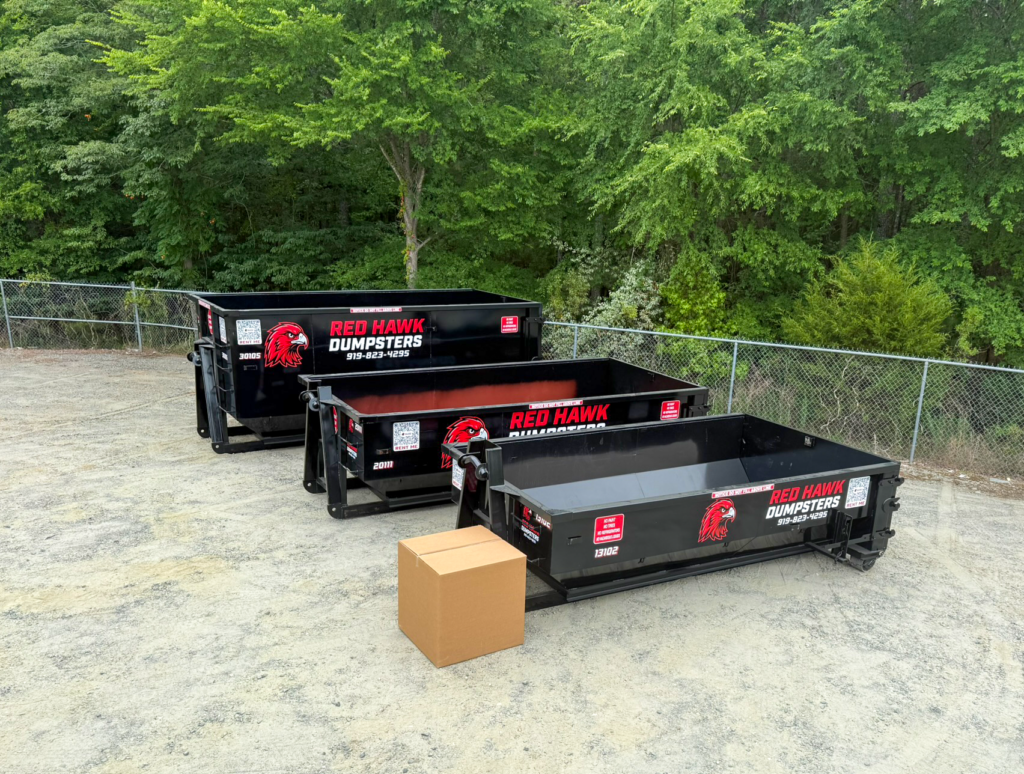
At Red Hawk, we offer four roll-off sizes: 10-Yard, 15-Yard, 20-Yard, and 30-Yard — priced from $270 to $465. The difference between the right size and the wrong one can easily be $150 or more when you factor in overage fees or a second haul.
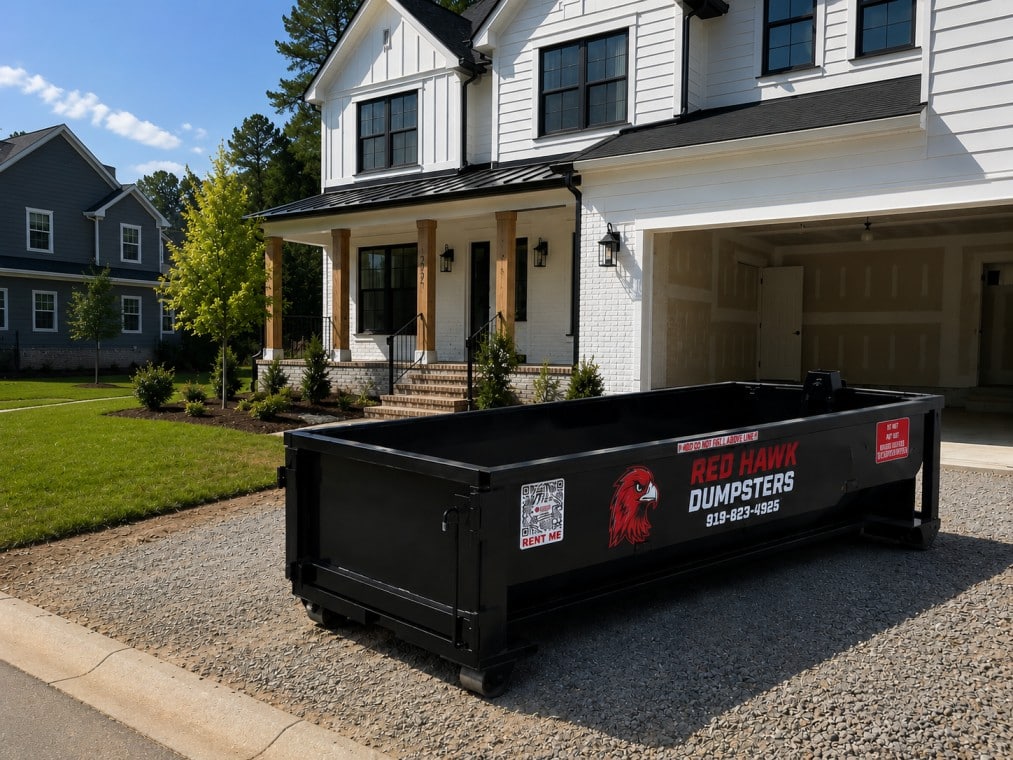
Beyond cost, size affects placement. A 30-yard dumpster is 16 feet long — fine for a long driveway or job site, but it won’t work in a tight urban alley or a short residential pad.
Rule of Thumb
When you're between sizes, go bigger. The cost difference is small. The cost of a second haul is not.
The 10-Yard Dumpster — $270
- Best for: small single-room projects, garage cleanouts, light yard work
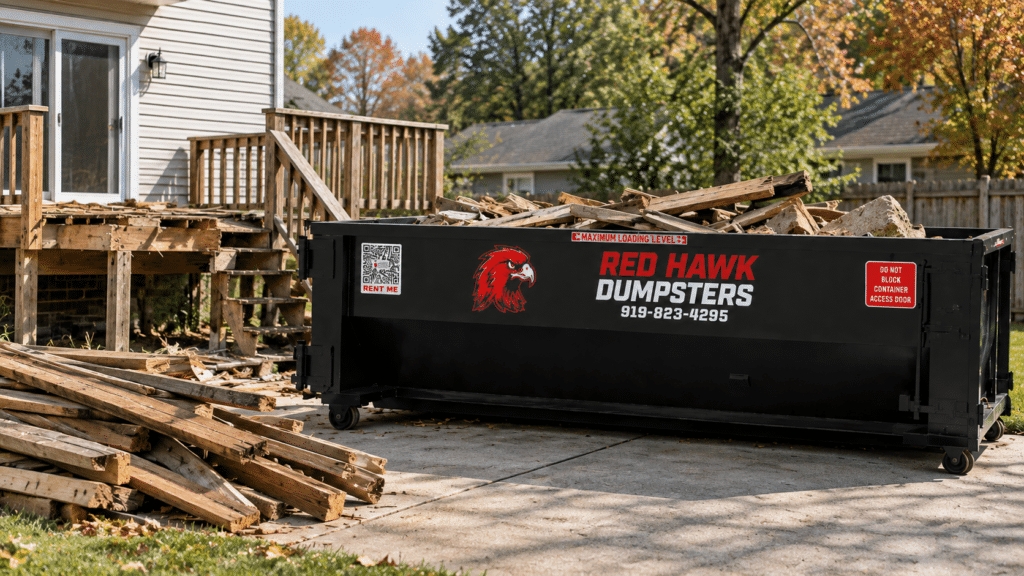
The 10-Yard is our smallest container and most affordable. It holds roughly 5 pickup truck loads with a 2,000 lb weight limit. Most homeowners doing a targeted project — a single bathroom remodel, garage cleanout, or small deck removal — will find it more than enough.
It’s also the right call for concrete and masonry jobs where volume is low but weight will be high. A small load of concrete can hit the weight ceiling before the container looks full — so the smaller size keeps you from overpaying for cube you can’t use.
10-Yard: Good Projects
- Single bathroom remodel
- Small roof repair under 10 sq
- Garage or basement cleanout
- Light landscaping & yard waste
- Deck removal under 200 sq ft
- Junk hauling — furniture, appliances
The 20-Yard Dumpster — $385
- Best for: kitchen remodels, multi-room demos, roofing, mid-size cleanouts
The 20-yard is our most popular size — it hits the sweet spot for the majority of residential renovation projects. At $270 and ~8 truck loads, it handles full kitchen gut-outs, multi-room flooring replacements, roofing jobs up to about 35 squares, and whole-house cleanouts for mid-size homes. For Triangle homeowners doing kitchen and bath remodels — typically generating cabinets, tile, drywall, and old appliances — the 20-yard handles the full scope without forcing a swap-out.
20-Yard: Good Projects
- Full kitchen remodel (cabinets, tile, drywall)
- Whole-house flooring replacement
- 2–3 bathroom renovations
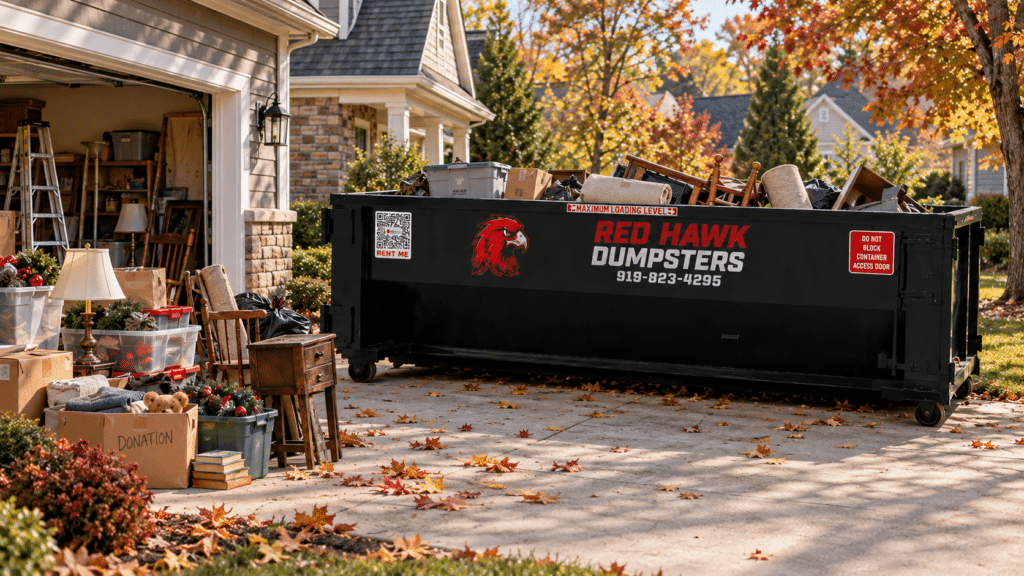
- Large garage or estate cleanout
- Roofing job up to 35 squares
- Mid-size deck demolition or rebuild
The 30-Yard Dumpster — $465
- Best for: major renovations, new construction, commercial projects, full demolitions
The 30-yard is our largest container. At 16 feet long and ~12 truck loads of capacity, it’s the right call for substantial construction projects, full house cleanouts, complete interior demolitions, and commercial tenant improvement jobs.
30-Yard: Good Projects
- Full house renovation or gut-out
- Large roofing job — 35+ squares
- New construction debris management
- Whole-house estate cleanout
- Commercial renovation & tenant improvement
- Structural demolition debris
Quick-Reference Size Chart
10-Yard - $270
- Includes 2,000 lbs
Roughly 3–4 full pickup loads. Right for a small bath or kitchen reno, targeted interior demo, or a tight job site where space is limited.
- Common uses:
Bathroom gut-out
Single-room flooring
1–2 room cleanout
Small renovation debris
20-Yard - $385
- Includes 4,000 lbs
Holds about 7-8 pickup loads. Our most popular contractor size — mid-size renovations, multi-room demo, and most roofing tear-offs without a second pull.
- Common uses:
Full kitchen renovation
Basement cleanout
Multi-room flooring
Deck or fence removal
30-Yard - $465
- Includes 6,000 lbs
Roughly 10-12 pickup loads. Built for new construction, whole-house renovations, large additions, and commercial build-outs where volume adds up fast.
- Common uses:
Roof tear-off
Whole-house gut-out
Major addition demo
Commercial cleanout
Weight Limits & Overage Fees
Every rental includes a weight allowance. Go over and you’re charged $0.04 per pound on the overage — which adds up fast on heavy materials.
10-Yard
2,000 lbs (1 ton)
Can hit this fast with tile or concrete
20-Yard
4,000 lbs (2 tons)
Standard mixed debris loads are fine
30-Yard
6,000 lbs (3 tons)
Most forgiving — mixed loads typically land under this
Watch Out for Concrete & Tile
Concrete weighs ~150 lbs per cubic foot. A 10-Yard container can exceed its 4,000 lb limit with the container looking barely full. Call us before booking if your project involves significant concrete or tile removal.
Pro Tips for Loading Your Dumpster
Break things down
Demolish cabinets, break apart large furniture, and flatten cardboard. Compact loads fit more and cost less.
Load heavy items first
Put concrete, tile, and masonry on the bottom. Lighter materials stack better on top.
Fill to the brim, not over it
Debris must be at or below the rim — never above. Overfilled containers can't be legally transported.
Distribute weight evenly
Don't pile everything on one end. Balanced loads are safer for transport.
Keep prohibited items out
Paint, chemicals, batteries, and refrigerants aren't accepted. They trigger disposal fees far exceeding the rental cost.
Call if you're unsure
Not sure if something is accepted? Call before you load it. Easier to ask upfront than deal with a charge after pickup.
Pro Tips for Loading Your Dumpster
Go bigger. An overfilled dumpster is a safety and legal problem — you can’t pile debris above the rim. Upgrading to a larger size at the start costs less than a second haul fee. When in doubt, size up.
You’re charged an overage rate of $0.04 per pound on anything over the included weight. For heavy materials like concrete or tile, you’re often better off requesting a lower-weight specialized load rather than mixing them with lighter debris.
Yes — concrete is accepted in all sizes, but it’s extremely heavy. A 10-Yard dumpster can hit its 4,000 lb weight limit with just a small volume of concrete. If your project involves heavy masonry, call us first.
Roughly: 10-Yard = 5 loads, 20-yard = 8 loads, 30-yard = 12 loads. These are estimates — actual capacity depends on how efficiently you load and the density of your materials.
Yes. Mixed C&D loads are standard. The only restriction is prohibited items like paint, chemicals, and hazardous materials — regardless of container size.
Still Not Sure? Call Us.
We’ll size your project in 60 seconds — no pressure, no sales pitch.
NC Licensed & Insured * Same-day delivery available. Book online or call before noon.