An organized disposal plan can turn an empty, cluttered, or damaged rental unit into a clean and functional property — without letting waste removal delay the leasing work.
Landlords should inspect the entire property, document its condition, resolve any legal questions about possessions left behind, separate donations and restricted waste, estimate debris volume and weight, and schedule the dumpster around cleaning and repair crews. A 10-yard dumpster may handle a small apartment or lightly cluttered rental. A 15-yard dumpster may fit a more involved single-unit turnover. A 20-yard dumpster is often useful for full-unit cleanouts, bulky furniture, flooring removal, or multiple work areas. A 30-yard dumpster may be appropriate for a whole-property cleanout or a large renovation with substantial approved debris. Inventory the waste and ask Red Hawk Dumpsters for project-specific sizing guidance before you book.
Why Waste Removal Can Control the Entire Turnover Schedule
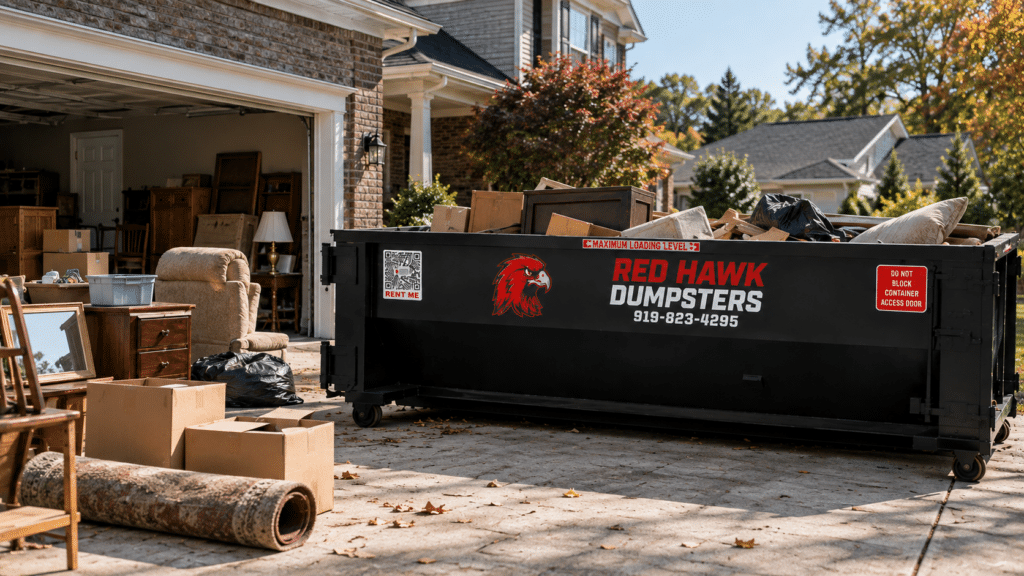
Rental-property turnovers rarely stop at ordinary cleaning. Abandoned furniture, mattresses, damaged shelving, broken blinds, worn carpeting, old flooring, drywall scraps, cabinet pieces, yard debris, appliance packaging, leftover maintenance materials, and general household junk all tend to show up at once, usually right when the leasing team wants the unit ready.
That kind of clutter can block painters, flooring installers, cleaners, maintenance workers, pest-control providers, and inspectors from actually getting their work done. A unit packed with leftover belongings also makes it harder to spot wall damage, flooring problems, leaks, pest activity, missing fixtures, or other repairs that need to happen before a new tenant moves in.
It is worth being clear about one thing up front: disposing of a former tenant’s belongings is not simply a hauling decision. Property professionals need to follow the lease and any applicable legal requirements before anything gets loaded into a container.
Property managers juggling several units at once often look into a commercial dumpster rental for Raleigh property managers to keep multiple turnovers moving on a predictable schedule.
Inspect and Document Before Anything Leaves the Property
The cleanout should begin with a complete walkthrough, not a rush to fill the first dumpster that shows up. Take time to document every room, closets and cabinets, garages and sheds, patios, balconies, and yards, attics, crawl spaces, and basements, appliances and mechanical areas, furniture and personal property left behind, and any visible damage or repair debris.
Photographs, written notes, maintenance records, and item inventories can help the property team distinguish tenant possessions from damaged building materials or owner-supplied furnishings. Photographs alone do not authorize disposal, though — ownership, notice, storage, and lease questions should be resolved before any disputed possessions are loaded into a container.
Separate the Turnover Into Clear Waste Categories
Throwing everything into one pile is the fastest way to create delays later. Sorting the turnover into distinct categories up front makes every later decision easier.
Belongings That May Require Legal Review
Personal documents, photographs, electronics, medication, financial records, clothing, furniture, and other property that may still belong to the former tenant should not automatically be discarded. These items deserve a separate hold area until ownership questions are settled.
Reusable or Donatable Items
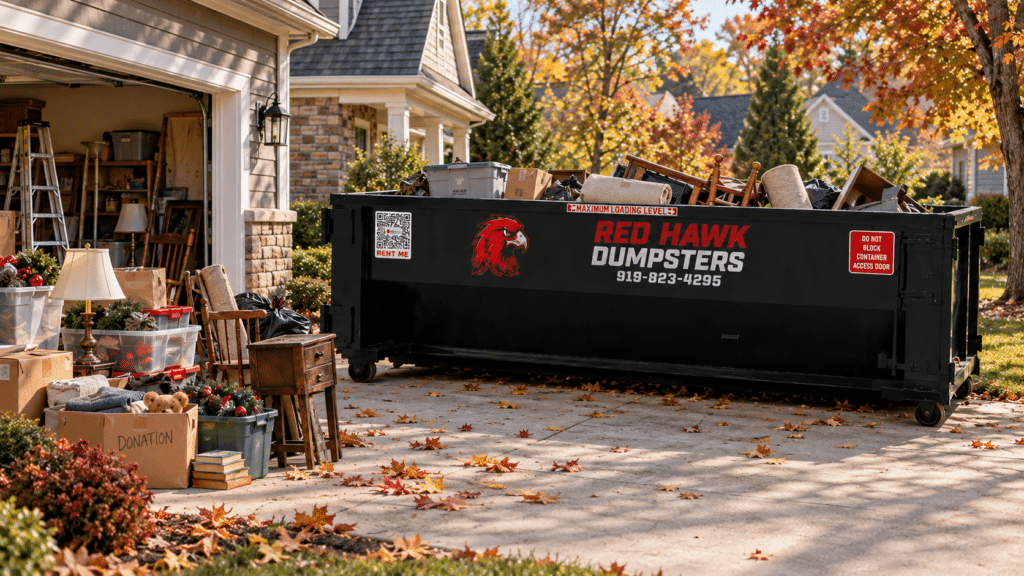
Clean furniture, functioning household goods, usable building materials, and unopened supplies may be worth donating. That should only happen once the property manager has confirmed the legal right to release the belongings.
General Household Junk
Broken furniture, damaged storage containers, worn rugs, empty packaging, and unusable décor make up the bulk of most turnovers, and this is usually the category with the fewest questions attached to it.
For this kind of everyday cleanout junk, a straightforward Raleigh dumpster rental is often all that is needed.
Repair and Renovation Debris
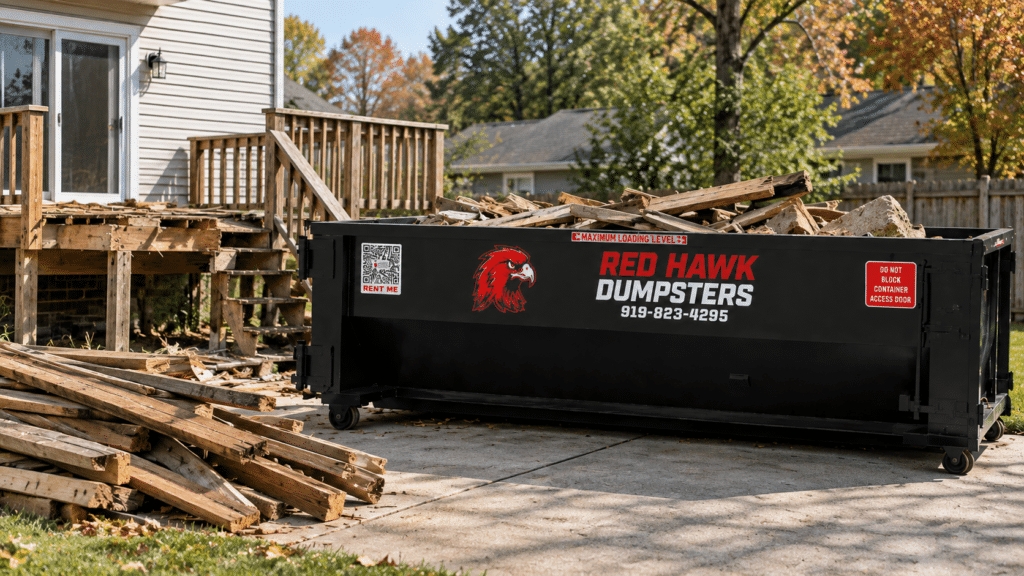
Flooring, drywall, lumber, cabinets, countertops, trim, doors, and approved fixtures removed during the turnover fall into their own category, and dense materials here require more careful weight planning than ordinary household clutter.
Property owners handling a full renovation between tenants often start with Red Hawk’s residential dumpster rental information to see which size fits the repair scope.
Restricted and Special-Handling Materials
Paint, solvents, chemicals, oils, batteries, tires, propane tanks, asbestos-containing materials, refrigerant appliances, and other prohibited waste need a different disposal path entirely. Arrange the appropriate method for these instead of concealing them beneath general junk.
Match the Dumpster to the Scope of the Turnover
The correct dumpster size depends on the number of rooms, the amount of furniture, the repair scope, material density, and whether exterior areas are included in the cleanout.
A 10-Yard Dumpster for a Focused Cleanup
A 10-yard dumpster holds approximately three to four pickup-truck loads. It tends to suit a studio or small apartment with limited junk, a lightly cluttered rental, a focused flooring or room cleanout, a small maintenance project, or a turnover where most belongings will remain or be donated. Dense construction debris can still reach the weight allowance quickly, even in this smaller container.
A 15-Yard Dumpster for a More Involved Single Unit
A 15-yard container holds approximately five pickup-truck loads and fits a fuller apartment or small rental house, several furniture pieces, carpeting and padding from multiple rooms, a garage or shed included with the unit, or a moderate cleanup paired with light repair debris. It offers more volume than a 10-yard dumpster but currently carries the same included weight allowance.
A 20-Yard Dumpster for Full-Unit Turnovers
A 20-yard dumpster holds approximately seven to eight pickup-truck loads and is commonly suitable for full-unit turnovers, bulky furniture, multiple rooms, and approved renovation debris. It can serve property managers handling a heavily cluttered rental house, multiple large furniture items, whole-unit flooring removal, a unit plus a garage, attic, or yard, a cleanout coordinated with painters and repair crews, or several work areas on one property.
Full breakdowns of this size are available through Red Hawk’s 20-yard dumpster rental information.
A 30-Yard Dumpster for Large Properties or Major Renovations
A 30-yard dumpster holds approximately eleven to twelve pickup-truck loads and fits a whole-property cleanout, a large house with several cluttered areas, a significant interior renovation, multiple units on the same property, or a cleanup involving bulky but approved materials. Even at this size, larger volume does not remove weight restrictions.
Plan for Weight as Carefully as Volume
Furniture, boxes, carpeting, and lightweight household junk can occupy significant volume without being extremely dense. Tile, brick, concrete, dirt, roofing shingles, plaster, large quantities of drywall, and dense flooring materials behave very differently — they can push a load toward its weight allowance well before the container looks full.
Mixed turnover loads are especially deceptive for this reason. A dumpster might look only partially full while it is actually approaching its weight limit. Disclose heavy materials before booking, and avoid mixing clean concrete or other dense debris into a general household-junk load without approval first.
Running an estimate through a dumpster weight calculator before ordering can help property teams avoid guessing wrong on a mixed load.
Coordinate Delivery With the Property Work Schedule
The dumpster should support the turnover schedule, not obstruct it. Think through access for the delivery truck, driveway width and surface, tenant and neighbor parking, gates and overhead clearance, maintenance vehicle access, walkways and fire lanes, homeowners association or property rules, public-street placement requirements, and pickup access once the container is loaded.
Ideally, the container arrives after the property team has completed documentation and legal review but before demolition or removal actually begins. Coordinating the rental period with cleaners, contractors, flooring crews, and maintenance staff keeps everyone working toward the same move-in date instead of around each other.
Questions about placement, acceptable materials, or rental periods are usually answered quickly in Red Hawk’s Red Hawk dumpster rental FAQ.
A Practical Turnover Cleanout Checklist
Property teams working outside the immediate Raleigh core can check Red Hawk’s Triangle service area before locking in a delivery date for a turnover.
How One Delayed Cleanout Can Push Back the New Lease
An unresolved pile of abandoned belongings or repair debris can quietly stall an entire turnover. The property cannot be inspected completely. Repair estimates remain incomplete. Flooring or painting work gets delayed. Junk gets moved from room to room instead of actually leaving the property. Maintenance staff end up spending billable time on repeated disposal trips instead of repairs. The final cleaning and photography dates move back, and the leasing team starts losing confidence in the move-in date they promised.
Ordering too small a dumpster creates a related problem. The property team may fill the container with visible furniture before ever reaching hidden closets, garages, sheds, flooring, or renovation debris — leaving the second half of the cleanout with nowhere to go.
Going the opposite direction and ordering the largest container available, without considering placement, weight, or actual project scope, is not automatically the better call either. The real goal is enough capacity for the full turnover while preserving site access and staying within disposal restrictions.
Prepare the Property Without Letting Debris Set the Timeline
An efficient Raleigh rental-property turnover begins with documentation, legal care, organized sorting, and an accurate estimate of the debris involved. A 10-yard container may fit a focused apartment or small rental cleanup. A 15-yard container provides more space for a fuller single-unit turnover. A 20-yard container is often practical for full-unit cleanouts, bulky furniture, and flooring removal. A 30-yard container may suit a large property or extensive approved renovation debris.
Red Hawk Dumpsters is a Raleigh-based roll-off dumpster company serving landlords, property managers, homeowners, contractors, and businesses. The company provides 10-, 15-, 20-, and 30-yard containers, online booking, multiple rental periods, driveway protection, and same-day delivery when scheduling and inventory allow, across Raleigh, Wake County, and communities throughout the Triangle.
Before the next turnover gets underway, take the time to inventory the materials, resolve any disposal questions, compare container sizes, and schedule the rental before maintenance work begins. That small amount of planning is usually what separates a turnover that stays on schedule from one that quietly slips week after week.
KEY TAKEAWAY
Landlords must document the property and resolve any legal questions about a former tenant’s belongings before discarding anything. The appropriate dumpster size depends on the unit size, amount of furniture, renovation scope, and debris weight — not just how the pile looks. Early coordination with cleaners, contractors, and Red Hawk Dumpsters can help keep a rental turnover organized and on schedule.
Frequently Asked Questions
Can a Landlord Throw Away Belongings Left by a Tenant in North Carolina?
Landlords should not automatically treat left-behind belongings as trash. They must follow the lease and applicable North Carolina requirements and should obtain legal guidance when ownership, notice, or storage obligations are unclear.
What Size Dumpster Do I Need for a Rental Property Cleanout?
A 10- or 15-yard container may suit a smaller or moderately cluttered unit, while a 20-yard dumpster may work better for a full-unit turnover with furniture. Large properties or significant renovations may require a 30-yard container.
Can Furniture and Carpet Go in a Rental Property Dumpster?
Many common furniture items, carpeting, and padding may be accepted, provided the landlord is legally authorized to dispose of them. Confirm questionable or unusually large items before loading.
Can Renovation Debris Go in the Same Dumpster as Household Junk?
Approved materials such as drywall, lumber, flooring, and certain fixtures may often be combined with general junk. Dense materials such as tile, concrete, brick, and shingles should be disclosed because they can affect weight and container selection.
What Cannot Go in a Rental Property Cleanout Dumpster?
Hazardous chemicals, paint, solvents, oils, batteries, tires, propane tanks, asbestos-containing materials, and appliances containing refrigerant are prohibited or restricted. Confirm uncertain items directly with Red Hawk Dumpsters.
Book a Rental Property Turnover Dumpster
Red Hawk Dumpsters serves landlords and property managers preparing units across Raleigh and the Triangle.
NC Licensed & Insured * Same-day delivery available. Book online or call before noon.