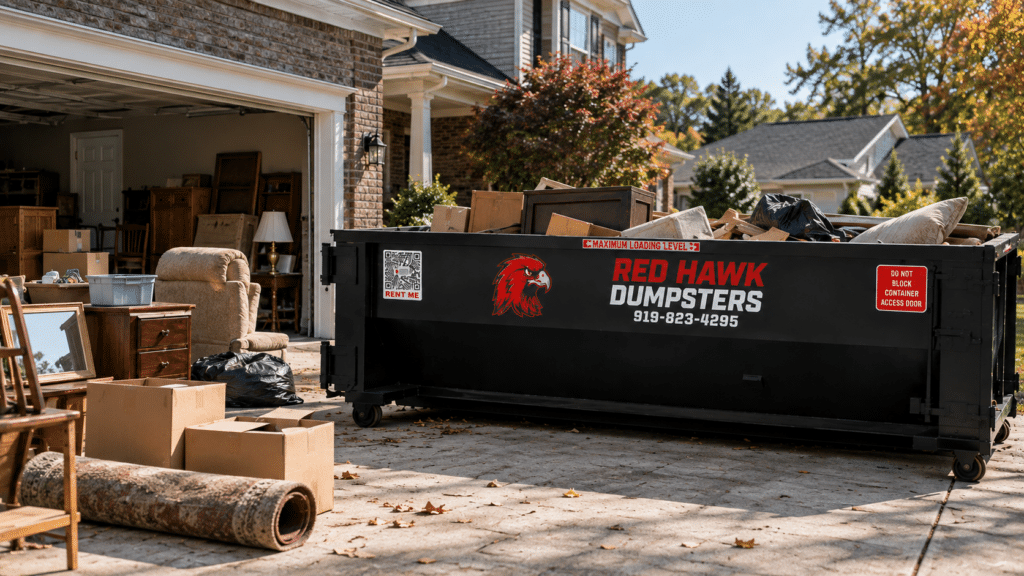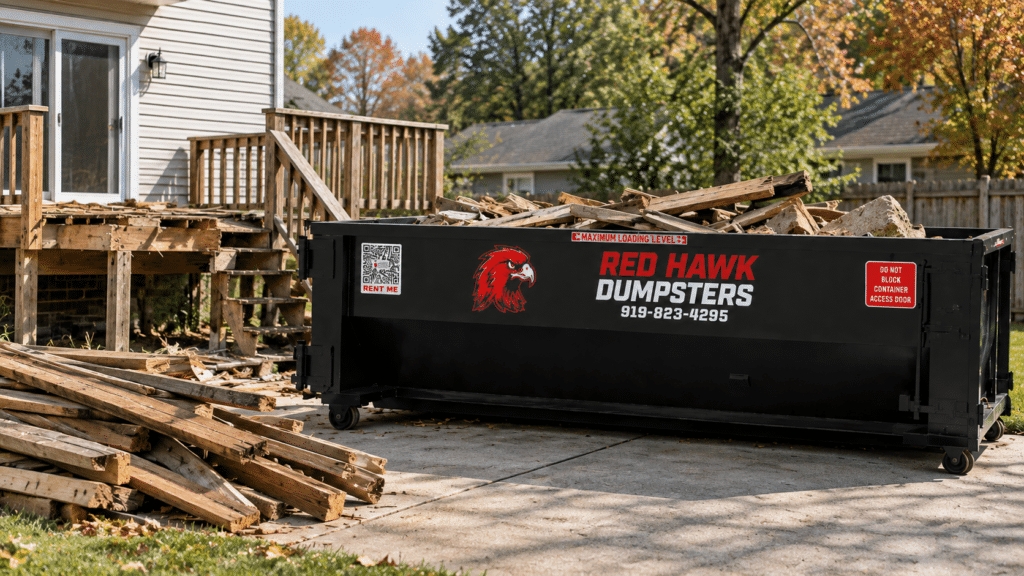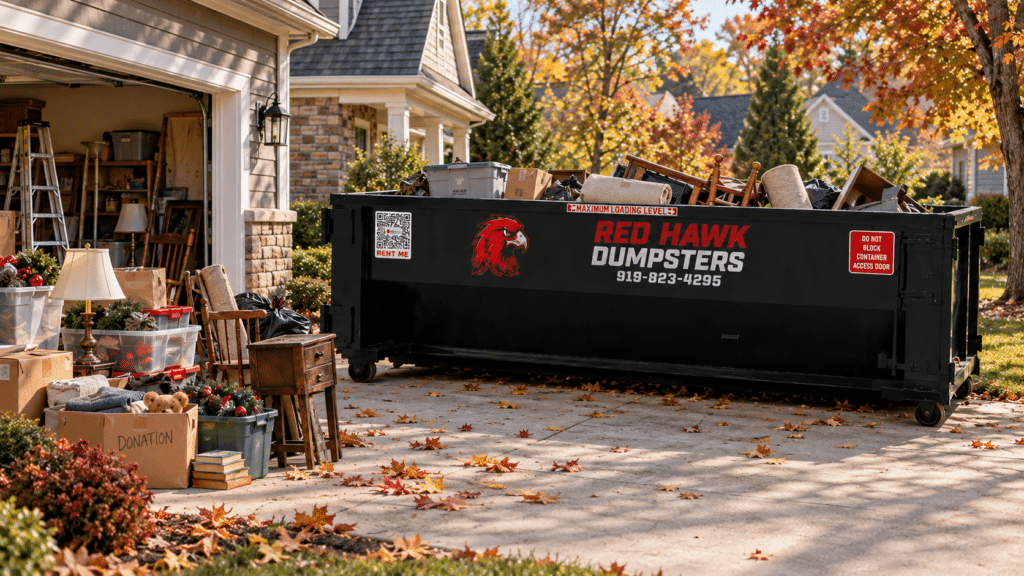
During a home renovation, many common materials can often go in a roll-off dumpster, including drywall, lumber, trim, flooring, cabinets, doors, shelving, furniture, packaging, and general non-hazardous construction debris. Roofing debris, tile, brick, concrete, dirt, stone, appliances, electronics, paint, chemicals, tires, batteries, liquids, fuel, and other questionable items should be discussed before loading because rules can depend on material type, weight, quantity, and local disposal requirements. Need help choosing a renovation dumpster in Raleigh? Book with Red Hawk Dumpster Rental before you start loading.
Renovation Debris Gets Confusing Fast
A home renovation looks simple on paper. Tear out the old material, clean up the mess, and move on to the next phase. Then the debris pile starts growing.
A bathroom remodel may include drywall, tile, wood, trim, old fixtures, packaging, flooring, and a vanity. A kitchen renovation may create cabinets, countertops, subflooring, doors, shelving, appliances, and mixed debris. A roofing project can leave behind shingles, underlayment, nails, flashing, plywood, and other jobsite waste.
That is where many homeowners and contractors run into the same question: what can actually go in the dumpster? The answer is not always “everything.” A roll-off dumpster rental is one of the easiest ways to keep a renovation clean and organized, but it still needs to be loaded correctly.
For homeowners searching for dumpster rental Raleigh NC, the best move is to think through the debris before the project starts, not after the dumpster is already sitting in the driveway.
Why Renovation Dumpsters Are Not One-Size-Fits-All
The biggest misunderstanding about a home renovation dumpster is that renovation debris is rarely one clean category. A flooring project might include carpet, padding, laminate, hardwood, tile, baseboards, tack strips, and packaging. A garage conversion might include shelving, furniture, drywall, insulation, lumber, and old household junk.
That matters because loading the wrong material can create delays, extra fees, rejected loads, safety concerns, or problems at disposal facilities. Heavy debris can overload the container. Restricted items can stop a pickup. Overfilled dumpsters may not be safe to haul.
Working with a local dumpster rental company helps because local crews understand the kinds of renovation projects happening throughout Raleigh, NC and surrounding service areas. Red Hawk Dumpster Rental can help customers think through what they are removing, choose the right dumpster size, and ask the right questions before loading drywall, wood, flooring, cabinets, furniture, roofing debris, or heavier materials.
“A roll-off dumpster can make a renovation cleaner, faster, and easier, but only when customers understand what belongs inside before the first load goes in. Drywall, wood, flooring, cabinets, furniture, and roofing debris may all be common renovation materials, but smart planning means asking about restricted, heavy, or questionable items before they create a problem.”
“A roll-off dumpster can make a renovation cleaner, faster, and easier, but only when customers understand what belongs inside before the first load goes in. Drywall, wood, flooring, cabinets, furniture, and roofing debris may all be common renovation materials, but smart planning means asking about restricted, heavy, or questionable items before they create a problem.”
How to Decide What Can Go in Your Renovation Dumpster
Before loading a construction debris dumpster, start by grouping materials into categories. This makes it easier to explain the project, choose the right dumpster, and avoid surprises later.
Common Renovation Materials That Often Go in a Dumpster
Many home renovation projects produce debris that is commonly handled through a roll-off dumpster rental. This may include drywall, lumber, trim, doors, shelving, cabinets, carpet, vinyl flooring, laminate flooring, old fixtures, packaging, and general non-hazardous construction debris.
For drywall disposal, wood disposal, flooring removal, cabinet removal, and furniture disposal, the key is to describe the project clearly before loading. For example, “kitchen cabinet tear-out with flooring and trim” is more helpful than simply saying “remodeling debris.” That gives Red Hawk Dumpster Rental a better idea of what the dumpster will hold and whether anything needs to be discussed before delivery.
Roofing Debris May Need Special Planning
Roofing debris is common, but it deserves extra attention. Shingles, underlayment, nails, flashing, drip edge, and damaged wood can add a lot of weight quickly. A roofing debris dumpster may need to be selected based on both volume and weight. A large tear-off can look like it will fit, but shingles are dense.
Roofers and homeowners should ask before loading roofing materials, especially for full roof replacements, multi-layer tear-offs, or projects involving wet or damaged decking. Planning this ahead of time helps avoid overloading the container or choosing a dumpster that is not ideal for the job.
Heavy Materials Should Be Discussed Before Loading
Some renovation debris is much heavier than it looks. Concrete, brick, dirt, tile, stone, block, asphalt, and similar dense materials can add weight fast. Even a small bathroom tile removal or patio demolition can become a heavy load.
That does not mean every heavy material is impossible to handle, but it does mean customers should ask before loading. If your project includes concrete, brick, dirt, tile, stone, or other dense debris, contact Red Hawk Dumpster Rental before placing those materials in the container.
Items Customers Should Always Ask About First
Some materials should never be treated as “probably fine.” Customers should ask before loading mattresses, appliances, electronics, paint, chemicals, tires, batteries, liquids, fuel, oil, solvents, propane tanks, pesticides, and anything that may be hazardous.
Accepted materials can depend on the item, the quantity, local disposal rules, and the type of dumpster rental. North Carolina and Wake County both provide guidance around household hazardous waste because materials like chemicals, fuels, and certain liquids require safer disposal routes than ordinary trash. When in doubt, ask first.
Keep the Dumpster Safe and Easy to Haul
A renovation dumpster also needs to be loaded safely. Keep debris below the top edge or marked fill line. Do not stack material above the container. Try to distribute weight evenly instead of placing all heavy material on one side. An overloaded, unbalanced, or overfilled dumpster may not be safe to transport.
Simple Steps Before You Start Loading
Make a list of everything you expect to remove during the renovation.
Separate general renovation debris from heavy materials.
Ask about drywall, wood, flooring, cabinets, furniture, and roofing debris before loading.
Confirm whether heavy materials like concrete, brick, tile, dirt, or stone are allowed.
Do not load paint, chemicals, liquids, tires, batteries, fuel, or hazardous waste without asking first.
Choose a flat, accessible dumpster placement area near the renovation work.
Keep debris below the top edge or marked fill line.
Distribute weight evenly inside the dumpster.
Contact Red Hawk Dumpster Rental if you are unsure whether a specific item can go in the dumpster.
One Wrong Item Can Slow Down the Whole Renovation
A roll-off dumpster is supposed to make a renovation easier. When it is loaded incorrectly, it can do the opposite. One questionable item can turn into a bigger issue — heavy debris can overload the dumpster, restricted materials can create pickup or disposal problems, and overfilled containers can delay hauling.
This can happen during kitchen remodels, bathroom renovations, flooring tear-outs, roofing jobs, garage conversions, attic cleanouts, and moving-related home updates. Instead of keeping the project moving, the customer may be stuck with debris that cannot be hauled yet or materials that need to be removed from the dumpster.
For homeowners, contractors, remodelers, and roofers in Raleigh, NC, a quick conversation before loading can prevent a lot of frustration. Red Hawk Dumpster Rental can help you think through the material list, understand what to ask about, and choose a dumpster that fits the job.
KEY TAKEAWAY
Most common renovation debris can often go in a roll-off dumpster, including drywall, wood, flooring, cabinets, furniture, packaging, and general construction debris. Heavy materials, roofing debris, appliances, electronics, paint, chemicals, tires, batteries, liquids, fuel, and hazardous items should be discussed before loading. The safest approach is to tell Red Hawk Dumpster Rental what you are removing before the project starts.
Frequently Asked Questions
Can I put drywall in a roll-off dumpster?
Drywall can often go in a renovation dumpster, but customers should confirm before loading. Rules may depend on the amount of drywall, whether it is mixed with other debris, and local disposal requirements.
Can wood and flooring go in a renovation dumpster?
Wood, trim, carpet, laminate, vinyl, and other flooring materials are common renovation debris. If the flooring includes tile, stone, adhesives, or unusually heavy material, ask Red Hawk Dumpster Rental before loading.
Can I throw away cabinets and furniture in a dumpster?
Cabinets, shelving, doors, and many furniture items can often be handled during renovation debris removal. Customers should ask first about oversized furniture, mattresses, appliances, or anything that may require special handling.
Can roofing shingles go in a roll-off dumpster?
Roofing shingles can often go in a roofing debris dumpster, but they are heavy and may need special planning. Homeowners and roofers should confirm the project size, number of layers, and expected weight before loading.
What items should I ask about before loading a dumpster?
Ask before loading paint, chemicals, liquids, tires, batteries, fuel, appliances, electronics, mattresses, concrete, brick, dirt, stone, tile, and hazardous waste. If you are unsure about an item, contact Red Hawk Dumpster Rental before placing it in the container.
Get the Right Dumpster Before the Mess Starts
Red Hawk Dumpster Rental serves renovations, remodels, roofing debris, and residential cleanouts in Raleigh, NC and the Triangle.
NC Licensed & Insured * Same-day delivery available. Book online or call before noon.